
Contents
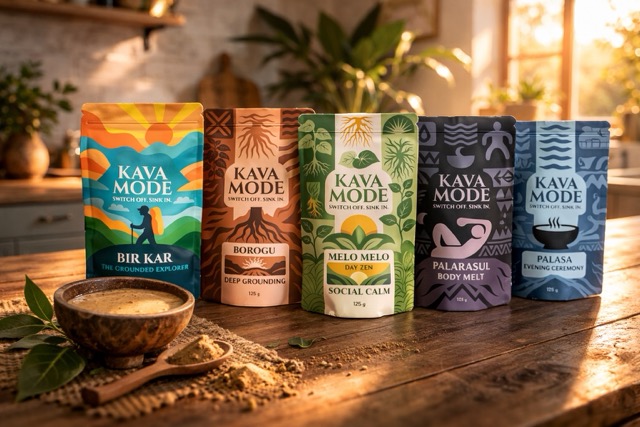
Premium Noble Kava
Discover certified quality and purity with our official partner.
Visit Kava-mode.comBrief & Concise
Today, there are over 100 documented Kava varieties that differ significantly in origin, chemotype, and effect. In Vanuatu alone, the presumed homeland of the plant, more than 80 different cultivars are known. This diversity is the result of over 3,000 years of targeted selection by Pacific cultures.
The differences between the varieties are not just academic – they significantly determine the effect a Kava drink produces. A Kelai from Vanuatu acts completely differently than a Loa Waka from Fiji. Understanding these differences is key to a conscious and satisfying Kava experience.
Noble Kava vs. Tudei Kava
The most important distinction that every Kava consumer must know is between Noble Kava and Tudei Kava. This classification was introduced by the government of Vanuatu and is based on the chemotype of the respective variety.
- ✅ Selected over centuries for pleasant effects
- ✅ Chemotype starts with 2 or 4, never with 5 or 6
- ✅ Onset of effect: 10-20 minutes
- ✅ Duration of effect: 3-6 hours, fades cleanly
- ✅ No "hangover" the next day
- ✅ Safe for regular use
Examples: Borogu, Melo Melo, Kelai, Palasa, Pouni Ono
- ❌ Chemotype starts with 5 or 6 (DHM-dominant)
- ❌ Onset of effect: 30-90 minutes (delayed)
- ❌ Effect lasts extremely long (up to 2 days)
- ❌ Often causes nausea and lethargy
- ❌ "Hangover" feeling the next day
- ❌ Banned for export in Vanuatu
Examples: Isa, Palimanu, Wildkava
Important: When purchasing, ensure that the vendor specifies the chemotype and exact variety. This transparency is a good sign of authentic Noble Kava.
The Three Effect Types
Noble Kava varieties are classified into three categories based on their dominant effects. This classification is based on the chemotype – that is, the relative concentration of the six main kavalactones.
Head-focused effect: Euphoria, mental clarity, sociability. Ideal for daytime and social occasions.
Chemotype: Often starts with 4 (Kavain) or 2 (DHK)
Varieties: Kelai, Pouni Ono, Moi
Balanced effect: Relaxation without fatigue, mental calmness with physical well-being.
Chemotype: Balanced ratio of 4, 2, and 3
Varieties: Melo Melo, Bir Kar, Borogu
Body-focused effect: Deep muscle relaxation, sedation, ideal for the evening and for sleeping.
Chemotype: High DHK content (2) in positions 1-2
Varieties: Palasa, Palarasul, Loa Waka
Overview of Growing Regions
Kava is now grown in various regions of the Pacific. Each region has developed its own varieties adapted to the local climate and cultural preferences.
| Region | Number of Varieties | Local Name | Known Varieties | Characteristics |
|---|---|---|---|---|
| Vanuatu | 80+ | Kava, Malok | Borogu, Melo Melo, Kelai, Palasa | Greatest diversity, region of origin |
| Fiji | 13 | Yaqona, Malogu | Loa Waka, Qila Balavu | Often heavier, good processing |
| Tonga | 7 | Kava | Pouni Ono, Leka Hina | All Noble, rather heady |
| Hawaii | 13 | 'Awa | Moi, Hiwa, Papa Kea | Very potent, expensive |
| Samoa | 4 | 'Ava | Ava La'au, Ava Tonga | Traditional, ceremonial |
| Papua New Guinea | 1 Noble | Kau | Kau kupwe | Only Noble variety |
Which Variety is Right for Me?
Choosing the right Kava variety depends on your desired effect and the time of day. Here is a guide:
Choose a Heady Kava:
- • Kelai (Vanuatu)
- • Pouni Ono (Tonga)
- • Moi (Hawaii)
Choose a Balanced Kava:
- • Melo Melo (Vanuatu)
- • Bir Kar (Vanuatu)
- • Borogu (Vanuatu)
Choose a Heavy Kava:
- • Palasa (Vanuatu)
- • Palarasul (Vanuatu)
- • Loa Waka (Fiji)
Choose a Heavy Kava:
- • Palasa (Vanuatu)
- • Loa Waka (Fiji)
- • Ambae (Vanuatu)
Tip for Beginners: Start with a Balanced Kava like Melo Melo or Borogu. These varieties provide a pleasant, balanced experience without extreme effects in one direction.
In-Depth Articles
Explore the individual aspects of Kava varieties in our specialized subpages:
Noble Kava vs. Tudei
The most important distinction: Why Noble Kava is safe and Tudei should be avoided.
Varieties from Vanuatu
Over 80 varieties from the homeland of Kava: Borogu, Melo Melo, Kelai, Palasa, and more.
Varieties from Fiji, Tonga & Hawaii
Regional specialties: Loa Waka, Pouni Ono, 'Awa Moi and their unique characteristics.
Variety Profiles in Detail
Detailed profiles of the main varieties with chemotypes, effects, and recommendations.
Based on studies by

CIRAD, French Agricultural Research Centre for International Development
View profile →With contributions from
This wiki is a curated resource that synthesizes research from peer-reviewed studies and expert researchers. It is not written by the researchers listed above, but rather based on their published work.
Scientific Sources
The information on this page is based on the following scientific studies and publications:
Kava: The Pacific Elixir - The Definitive Guide to Its Ethnobotany, History, and Chemistry
Vincent Lebot, Mark Merlin, Lamont Lindstrom (1997) – Yale University Press
View studyMeasuring the Chemical and Cytotoxic Variability of Commercially Available Kava (Piper methysticum G. Forster)
Unknown (Unknown) – Unknown
View studyContents
Premium Noble Kava
Discover certified quality and purity with our official partner.
Visit Kava-mode.com
Kava – Root of Calm
The comprehensive guide to effects, history & culture.