
Legal status & legality
A detailed legal analysis of the situation in Germany, the EU and other international legal areas based on historical evidence and current official practice
Contents
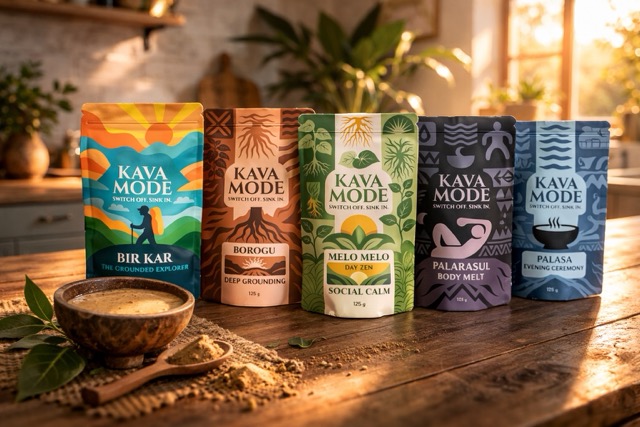
Premium Noble Kava
Discover certified quality and purity with our official partner.
Visit Kava-mode.comThe legal situation of Kava (Piper methysticum) in Europe is often confused with the old drug debate. For the Novel Food question, however, it is crucial whether Kava before 15. May 1997 was used to a significant extent in the EU. From our legal perspective, the documented market, approval and usage history clearly speaks for this: Kava is not a Novel Food and is generally marketable as a food, provided it is not marketed as a medicine.
The Novel Food status
The key question for the marketability of Kava as a food or dietary supplement in the EU is not whether Kava was objected to at some point, but whether it was before 15. May 1997 was already being used for human consumption to a significant extent in the EU. The Novel Food classification depends on this historical evidence.
From our point of view, the result is clear: Kava is not a novel food. This is supported not only by German approval and product evidence, but also by European market evidence from the food and supplement sector. These include the FAO reference to delivery quantities to Europe in 1996 as well as descriptions from IARC and NCBI on dietary supplements, drug stores and supermarkets. Later official practice or individual complaints do not change this relevant pre-1997 use.
- Drug approval before 1997: Kava was already established as a herbal medicine in Germany long before 1997; the Kommission E published a positive monograph in 1990.
- Market presence: The ETC/RAFI documentation describes ongoing marketing of Kava extracts by numerous companies in Europe as early as the mid-1990s.
- Specific products: Official BfArM documents name upstream and downstream historical preparations such as “Antares”, “Kava-ratiopharm”, “Kavatino”, “Kavain Harras”, “Kavosporal forte” and “Kavasedon”.
- Food/supplement market: IARC/NCBI also describes Kava in Europe and North America as a food or dietary supplement in tablet, capsule, tea and liquid form, available in drug stores and supermarkets, among others.
- Delivery quantities to Europe: The FAO states around 100,000 kg of Kava delivered to Europe in 1996; This contradicts any claim that Kava only came onto the EU market after 1997.
- No approval requirement: If the historical previous use is documented before 1997, the Novel Food approval requirement does not apply.
- BVL principle: The BVL expressly makes it clear that a substance can in principle be permitted in both medicines and food. A drug conflict therefore does not prove a general food ban.
- Marketability: Kava can be assessed and marketed in accordance with food law; What matters is the composition, labeling and form of marketing, not a blanket claim of novelty.
- Burden of proof: Even if authorities or market participants require proof, the historical documentation is strong enough to clearly demonstrate the relevant pre-1997 use. Individual complaints do not refute this initial situation.
The situation in Germany
Germany has a special history in dealing with Kava. For today's classification, it is important not to mix pharmaceutical law, official practice and the separate Novel Food issue.
Phase 1: The heyday (until 2001)
Kava was an established herbal remedy. In 1990, Commission E confirmed its effectiveness for nervous anxiety states. There were numerous approved preparations in pharmacies and on the market, including Antares, Kava-ratiopharm, Kavatino, Kavain Harras, Kavosporal forte and Kavasedon.
Phase 2: The ban in the pharmaceutical sector (2002-2014)
Due to suspected cases of liver damage, the BfArM revoked the approvals for Kava drugs in 2002. This debate concerned the drugs sector and is not identical to the Novel Food question under food law.
Phase 3: Courts, requirements and new authority line (from 2014/2019/2024)
In 2014/2015, courts declared the earlier revocation unlawful; In 2015, BfArM initially ordered risk-reducing changes. In 2019, the BfArM revoked approvals in the pharmaceutical sector again. Another court decision in 2024 was classified by Kava Coalition as an important step towards legalization. What remains crucial to the Novel Food question, however, is that Kava was present, approved and used in Germany long before 1997.
Differentiation: medicines vs. food
However, this does not mean that kava is automatically new or unmarketable as a food. The BVL expressly points out that a substance can in principle be permitted in both medicines and food.
The foreword to the federal and state substance lists also makes it clear that dietary supplements may contain preparations that were also used in pharmaceuticals. Therefore, the revocation of a drug approval does not prove that traditionally produced Noble Kava is banned or novel as a food.
The EU legal situation
There is no uniform total ban on Kava at EU level. However, the practice is not the same in every Member State. What is crucial is the separation between pharmaceutical law, food law and official enforcement. The HoA/BVL report from 2024 shows a technical movement towards “assumed not novel”, while the EU Agri-Food Fraud Report 2025 shows that individual member states continue to object to Kava in food supplements. From the perspective of documented prior use, however, this inconsistent enforcement does not change the fact that the historical evidence clearly speaks against a Novel Food classification.
Legal status in Europe
Note: This map is for guidance only and does not constitute legal advice. Laws are subject to change.
| country | status | Details |
|---|---|---|
| Germany | Legal | Basically marketable as food/NEM; the earlier debate concerned primarily the pharmaceutical sector. |
| Poland | Legal | The old ban was explicitly lifted in 2018. Kava is freely available. |
| Great Britain | Restricted | Sales for human consumption are still officially restricted, possession and import for personal use are often tolerated. |
| France | Gray area | Strict interpretation in enforcement, but no new historical evidence against the use documented before 1997. |
Alongside the legal and historical sources, concrete trade evidence shows that Kava had a real presence in the European market.
Download the complete legal opinion on the classification of Kava as Novel Food here. It brings together the historical usage history, the pre-1997 evidence and the legal arguments against a Novel Food classification. Available in German and English.
Copyright Notice & Terms of Use:
The legal opinion was commissioned by Kava-Mode.com.
Conclusion & recommendation
In our view, the available historical and legal evidence clearly suggests that traditionally produced Noble Kava can be marketed in Germany and the EU within a legitimate food law framework. This is supported by the Kommission-E-Monographie, previous drug approvals, specific products before 1997, the FAO reference to delivery quantities to Europe and the descriptions of the IARC and NCBI on the food and supplement market. In our opinion, anyone who offers kava as a normal food without any promise of healing, with a clear origin, clean labeling and reliable quality documentation is on a legally viable basis.
Current development: USA (January 2026)
The US FDA issued an important clarification in January 2026:
- Traditionally prepared Kava beverages (aqueous infusion of Kava roots) are considered a conventional food under U.S. federal law
- Capsules, tinctures and concentrated extracts remain regulated as Dietary Supplements
- The distinction is based on the traditional preparation method and the lower Kavalactone concentrations with aqueous extraction
- This opens the door for Kava beverages to enter the mainstream US market alongside teas and functional beverages
LA County, California: Official Clarification (February 2026)
The Los Angeles County Department of Public Health released an important clarification regarding the status of Kava in February 2026:
- Traditionally prepared Kava tea is officially permitted as a conventional food in LA County
- The sale of correctly declared Kava food supplements (pre-packaged, with Supplement Facts label) is also permitted
- Kava Coalition welcomed the decision as an important step for legal certainty in the Californian market
- This follows the January 2026 FDA clarification and strengthens the position of Kava at the local level
New Zealand: Planned Kava reforms (2026)
The New Zealand Ministry for Primary Industries (MPI) is planning a comprehensive adjustment of the Kava food standard:
- Ban on non-noble varieties (like Tudei-Kava) for the food market
- Prohibition of food additives in Kava products
- Alignment with Australian standards and WHO recommendations
- Pacific leaders generally support the reforms
- Concerns from small Tongan farmers who could be excluded from the market by stricter rules
Fiji: First Kava law in preparation (2026)
Fiji, one of the main Kava producers, is working on its first national Kava law:
- Protection for growers, processors and exporters
- Quality standards for export
- Regulating the growing industry
- Initial consultations began in February 2026
Fiji: Kava exports at record high (2024/2025)
Fiji's Kava industry sees strong growth:
- Kava exports reached a record value of 53 million FJD in 2024
- The government has massively increased the subsidy for Kava cultivation to 1.9 million FJD
- Target Export target: 250 million FJD by 2028
- The US-Kava market is estimated to be over 1 billion USD
Sources & References
- <a href="/documents/kava_legal_opinion_public_en.pdf" target="_blank" rel="noopener noreferrer">Public legal opinion on Kava (2026)</a>
- <a href="https://food.ec.europa.eu/food-safety/novel-food/novel-food-status-catalogue_en" target="_blank" rel="noopener noreferrer">European Commission: Novel Food Status Catalog</a>
- <a href="https://www.bvl.bund.de/DE/Arbeitsbereiche/01_Lebensmittel/01_Aufgaben/07_Stofflisten/rechtliche_grundlagen/recht_node.html" target="_blank" rel="noopener noreferrer">BVL: Legal basis / substance lists plants and plant parts</a>
- <a href="https://www.bvl.bund.de/SharedDocs/Berichte/08_Stoffliste_Bund_Bundeslaender/stofflisten_pflanzen_pflanzenteileVorwort_2_Aufl.pdf?__blob=publicationFile&v=5" target="_blank" rel="noopener noreferrer">BVL: Substance lists for plants and plant parts - foreword (2nd edition, 2020)</a>
- <a href="https://www.bvl.bund.de/SharedDocs/Downloads/01_Lebensmittel/Internationales/Report_HoA_WG_FS-de.pdf?__blob=publicationFile&v=8" target="_blank" rel="noopener noreferrer">HoA Working Group “Food Supplements” / BVL (2024)</a>
- Kommission E Monograph, Federal Gazette No. 101 from 1.6.1990
- ETC Group / RAFI Communique: "The Kava Boom" (1996/1997)
- <a href="https://www.ovg.nrw.de/behoerde/presse/pressemitteilungen/01_archiv/2015/12_150225/index.php" target="_blank" rel="noopener noreferrer">OVG NRW: Revocation of approval of Kava-Kava medicines unlawful (2015)</a>
- <a href="https://www.bfarm.de/SharedDocs/Risikoinformationen/Pharmakovigilanz/DE/RV_STP/g-l/kavakava.html" target="_blank" rel="noopener noreferrer">BfArM: Kava-Kava-containing medicines (2019)</a>
- <a href="https://www.ncbi.nlm.nih.gov/books/NBK350450/" target="_blank" rel="noopener noreferrer">NCBI / IARC: Kava chapter</a>
- <a href="https://www.fao.org/docrep/pdf/010/a1567e/a1567e02.pdf" target="_blank" rel="noopener noreferrer">FAO: Non-Wood News No. 16 / Kava market history and exports</a>
- <a href="https://www.globenewswire.com/news-release/2024/08/13/2928871/0/de/Kava-Coalition-feiert-Gerichtsentscheidung-zur-Ebnung-des-Weges-f%C3%BCr-die-Legalisierung-von-Kava-in-Deutschland.html" target="_blank" rel="noopener noreferrer">GlobeNewswire / Kava Coalition: Court decision paving the way for the legalization of Kava in Germany (August 2024)</a>
- <a href="https://www.nutraingredients.com/Article/2002/02/05/Kava-Kava-pulled-from-Irish-market-amid-safety-fears/" target="_blank" rel="noopener noreferrer">NutraIngredients: Irish market / 13 different brand names</a>
- <a href="https://www.newhope.com/regulatory/kava-back-on-the-shelves-in-uk" target="_blank" rel="noopener noreferrer">New Hope: Kava back on the shelves in UK</a>
- <a href="https://www.nutraingredients.com/Article/2003/11/28/Kava-regains-shelf-space-in-Wales/" target="_blank" rel="noopener noreferrer">NutraIngredients: Holland & Barrett / shelf space in Wales</a>
- <a href="https://food.ec.europa.eu/document/download/c5153710-6c3e-4f81-8dc5-2587d81d8bc8_en?filename=ff_ffn_monthly-report_202503.pdf" target="_blank" rel="noopener noreferrer">European Commission: Monthly report on EU Agri-Food Fraud suspicions (March 2025)</a>
- Regulation (EU) 2015/2283 on Novel Foods
- <a href="https://grctimes.com/fda-kava-ruling-conventional-food-under-federal-law-safety-evidence-historical-use/" target="_blank" rel="noopener noreferrer">FDA Kava Ruling (January 2026) - Classification as conventional food</a>
- <a href="https://www.fijitimes.com.fj/move-to-regulate-yaqona-industry/" target="_blank" rel="noopener noreferrer">The Fiji Times: Move to regulate yaqona industry (February 2026)</a>
- <a href="https://www.reflector.com/news/national/kava-coalition-applauds-los-angeles-county-department-of-public-health-update-clarifying-the-status-of/article_1118588e-75c8-51eb-80d3-46d57f8c733f.html" target="_blank" rel="noopener noreferrer">Kava Coalition: LA County Department of Public Health Update (February 2026)</a>
- <a href="https://pmn.co.nz/read/health/pacific-leaders-back-kava-reforms-but-warn-of-risks-for-small-growers" target="_blank" rel="noopener noreferrer">Pacific Media Network: NZ Kava Reforms (February 2026)</a>
- <a href="https://nit.com.au/06-02-2026/22528/fiji-boosts-kava-funding-as-exports-hit-record-53-million" target="_blank" rel="noopener noreferrer">National Indigenous Times: Fiji Kava Exports Record (February 2026)</a>
Frequently asked questions about legality (FAQ)
Scientific Sources
The information on this page is based on the following scientific studies and publications:
Contents
Premium Noble Kava
Discover certified quality and purity with our official partner.
Visit Kava-mode.com
Kava – Root of Calm
The comprehensive guide to effects, history & culture.