
Noble Kava vs. Tudei Kava
The distinction between Noble Kava and Tudei Kava describes cultivar and quality categories. The ranking in a chemotype can indicate the chemical profile, but it is not sufficient on its own. Confirmed cultivar identity, plant parts, origin, processing and analytical quality data must also be considered.
Contents
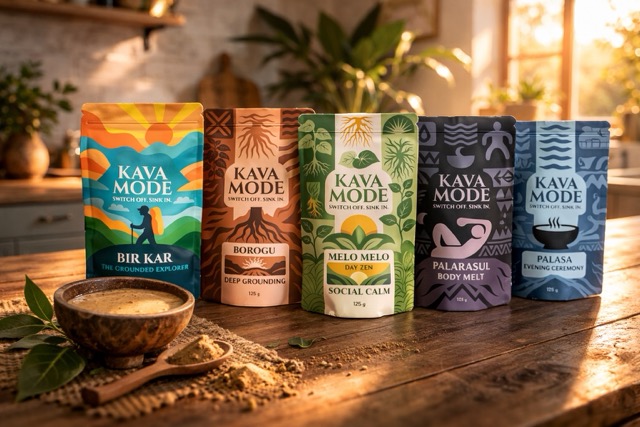
Premium Noble Kava
Discover certified quality and purity with our official partner.
Visit Kava-mode.comBrief & Concise
The distinction between Noble Kava and Tudei Kava describes cultivar and quality categories. The ranking in a chemotype can indicate the chemical profile, but it is not sufficient on its own. Confirmed cultivar identity, plant parts, origin, processing and analytical quality data must also be considered.
Traditional Noble profiles are usually described as shorter-lasting and more pleasant Tudei profiles are often described as longer-lasting and more body-centered Onset and duration vary with cultivar, preparation, amount and person
History of Classification
The distinction between Noble Kava and Tudei Kava describes cultivar and quality categories. The ranking in a chemotype can indicate the chemical profile, but it is not sufficient on its own. Confirmed cultivar identity, plant parts, origin, processing and analytical quality data must also be considered.
The research of Dr. Vincent Lebot, a leading Kava scientist, was crucial for the development of this classification. Lebot developed methods for the chemical analysis of Kava varieties and identified the chemotypes that distinguish Noble from Tudei.
Chemical Differences
The distinction between Noble Kava and Tudei Kava describes cultivar and quality categories. The ranking in a chemotype can indicate the chemical profile, but it is not sufficient on its own. Confirmed cultivar identity, plant parts, origin, processing and analytical quality data must also be considered.
| Characteristic | Noble Kava | Tudei Kava |
|---|---|---|
| Characteristic | A chemotype can support classification, but does not prove it by itself | Tudei is a cultivar and quality category, not a group defined solely by the first chemotype digit |
- Literature reference: 423561 · Published analyses: 423516 / 423651 – Borogu (Balanced-Heavy)
- Literature reference: 245361 · Modern analyzed/reported variants: 423156 / 243156 – Melo Melo (Balanced)
- Literature reference: 246513 · Additional shop/trade reports: 423156 / 423561 – Bir Kar (Heady)
- Literature reference: 246531 · Other reported variants: 423165 / 421635 – Palasa (Heavy)
- Literature reference: 246531 · Other reported variants: 423156 / 423165 – Palarasul (Heavy)
- Literature reference: 423516 · Published analyses: 423156 – Kelai (Heady)
When purchasing, look for a clearly named cultivar, plant parts, origin and processing, plus analytical data where available. The chemotype is one piece of evidence, not proof on its own.
- Isa
- Palimanu
- Wildkava
When purchasing, look for a clearly named cultivar, plant parts, origin and processing, plus analytical data where available. The chemotype is one piece of evidence, not proof on its own. These names are examples, not universal chemotype codes. Documented cultivar identity and a reliable source for the particular classification are decisive.
Effects Differences
The distinction between Noble Kava and Tudei Kava describes cultivar and quality categories. The ranking in a chemotype can indicate the chemical profile, but it is not sufficient on its own. Confirmed cultivar identity, plant parts, origin, processing and analytical quality data must also be considered.
| Aspect | Noble Kava | Tudei Kava |
|---|---|---|
| Aspect | Traditional Noble profiles are usually described as shorter-lasting and more pleasant | Tudei profiles are often described as longer-lasting and more body-centered |
| Aspect | Onset and duration vary with cultivar, preparation, amount and person | Onset and duration can vary considerably |
Traditional cultivars selected over centuries Traditional Noble profiles are usually described as shorter-lasting and more pleasant Onset and duration vary with cultivar, preparation, amount and person A chemotype can support classification, but does not prove it by itself There is no blanket guarantee of being hangover-free or well tolerated Quality also depends on cultivar identity, plant parts, origin, processing and analytical data
Tudei is a cultivar and quality category, not a group defined solely by the first chemotype digit Tudei profiles are often described as longer-lasting and more body-centered Onset and duration can vary considerably Nausea, tiredness or after-effects are reported more often, but do not occur equally in everyone A chemotype is only one clue; identity, plant parts, origin, processing and analytical data must also be assessed There is no absolute two-day duration or identical effect profile for every person
Identifying Tudei
When purchasing, look for a clearly named cultivar, plant parts, origin and processing, plus analytical data where available. The chemotype is one piece of evidence, not proof on its own.
Warning Signs of Tudei Adulteration
- ⚠️ When purchasing, look for a clearly named cultivar, plant parts, origin and processing, plus analytical data where available. The chemotype is one piece of evidence, not proof on its own.
When purchasing, look for a clearly named cultivar, plant parts, origin and processing, plus analytical data where available. The chemotype is one piece of evidence, not proof on its own.
Safety Aspects
The distinction between Noble Kava and Tudei Kava describes cultivar and quality categories. The ranking in a chemotype can indicate the chemical profile, but it is not sufficient on its own. Confirmed cultivar identity, plant parts, origin, processing and analytical quality data must also be considered.
- • Regional Codex standard CXS 336R-2020 permits roots, peeled rhizomes and peeled basal stems up to the first node for Noble Kava. Upper stems, leaves, peelings/bark and extraction residues are excluded.
- • When purchasing, look for a clearly named cultivar, plant parts, origin and processing, plus analytical data where available. The chemotype is one piece of evidence, not proof on its own.
Traditional cultivars selected over centuries Traditional Noble profiles are usually described as shorter-lasting and more pleasant Onset and duration vary with cultivar, preparation, amount and person A chemotype can support classification, but does not prove it by itself There is no blanket guarantee of being hangover-free or well tolerated Quality also depends on cultivar identity, plant parts, origin, processing and analytical data
Continue in the Varieties chapter:
Varieties from Vanuatu
Over 80 varieties from the home of Kava: Borogu, Melo Melo, Kelai, and more
Based on studies by

CIRAD, French Agricultural Research Centre for International Development
View profile →With contributions from
This wiki is a curated resource that synthesizes research from peer-reviewed studies and expert researchers. It is not written by the researchers listed above, but rather based on their published work.
Scientific Sources
The information on this page is based on the following scientific studies and publications:
Kava: The Pacific Elixir - The Definitive Guide to Its Ethnobotany, History, and Chemistry
Vincent Lebot, Mark Merlin, Lamont Lindstrom (1997) – Yale University Press
View studyIn Vitro Toxicity of Kava Alkaloid, Pipermethystine, in HepG2 Cells Compared to Kavalactones
Nerurkar P.V., Dragull K., Tang C.S. (2004) – Toxicological Sciences
View studyContents
Premium Noble Kava
Discover certified quality and purity with our official partner.
Visit Kava-mode.com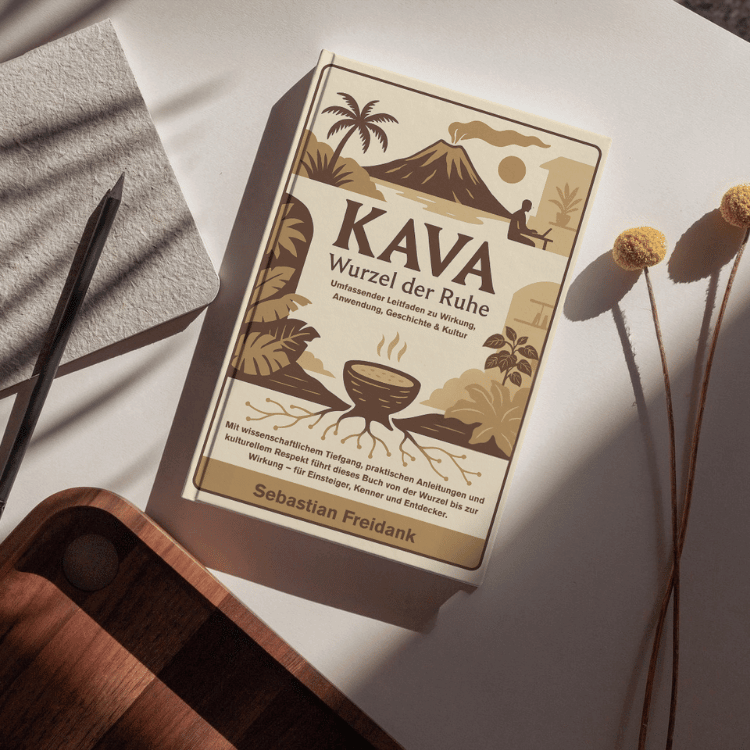
Kava – Root of Calm
The comprehensive guide to effects, history & culture.