
Kava Wiki LogoKava Wiki
Knowledge Database

Scientific
Research

A curated collection of over 100 scientific papers, clinical studies, and specialized books on Piper methysticum. This database serves to provide objective information on effects, safety, and cultural significance.

93+
Sources
33
Years of Research
Newly integrated

New in March 2026

These four studies were newly added. Their findings have already been incorporated into the effects, constituents, culture, and safety pages.

42026
Pharmacology & Safety2026Phytotherapy Research

Desmethoxyyangonin, a Potent Cannabinoid Receptor 2 Agonist, Alleviates Bone Loss in Ovariectomized Mice via Dual Regulation of Osteoblast and Osteoclast Function

Mening'oo G.W., Yuan H., Wang M., Wang W., Ma F., Zhang W., Ma J., Chen J., Jiang Y., Ma X.

Desmethoxyyangonin (DMY), a kavalactone, demonstrates anti-osteoporotic effects as a potent CB2 agonist. In the OVX mouse model, DMY significantly restored bone mineral density and improved trabecular microarchitecture. In vitro, DMY promoted osteoblast differentiation and mineralization while suppressing osteoclast formation. The effect is mediated via CB2-dependent PI3K/Akt and Wnt/β-catenin signaling pathways.
Significance

First study to demonstrate an anti-osteoporotic effect of a kavalactone via the CB2 receptor. This expands the therapeutic potential of Kava constituents beyond their known anxiolytic effects.

General Research2026Proceedings of the National Academy of Sciences

Kava consumption and the rise of sociopolitical complexity in Oceania

Hrnčíř V., Sheehan O., Claessens S., Gray R.D.

Analysis of 83 Oceanic societies reveals a positive relationship between traditional Kava consumption and political complexity, as well as social stratification. However, the results are not robust against controls for non-independence. There is no evidence for co-evolution between Kava drinking and sociopolitical traits after controlling for spatial non-independence. Despite Kava's cultural significance, its consumption was likely not a major driver of sociopolitical complexity.
Significance

High-ranking PNAS study that tests the 'Drunk Hypothesis' using Kava as a case study. Important for understanding the cultural role of Kava in Oceania.

Chemistry & Biochemistry2026Chemistry & Biodiversity

Flavokawain A: A Natural MAO-A Inhibitor With Therapeutic Promise for Depression

Pawa V., Shimpi A., Oh J.M., Kadam V., Patil B., Gawli C., Jagtap V., Mathew B., Sudevan S., Ansari I., Kim H., Patel H.M.

Flavokawain A, a natural chalcone from Piper methysticum, exhibits potent and selective MAO-A inhibition (IC50: 0.077 µM) with a selectivity index of 4.84 compared to the clinically used reversible MAO-A inhibitor toloxatone. Blood-brain barrier permeability confirms CNS efficacy. Molecular docking and dynamics simulations reveal stable binding in the MAO-A active site. This positions Flavokawain A as a promising natural lead compound for the treatment of depression.
Significance

Important discovery of a new mechanism of action for Kava constituents: MAO-A inhibition by Flavokawain A. Relevant for potential antidepressant applications and interactions with MAO inhibitors.

Pharmacology & Safety2026Phytomedicine

Kavain for health promotion and disease mitigation: Pharmacological promise and therapeutic perspectives

Pampita N., Sajeev A., Hegde M., Alqahtani M.S., Abbas M., Kavalakatt J., Sethi G., Bishayee A., Kunnumakkara A.B.

Comprehensive review of Kavain: Evaluation of its anti-inflammatory, anxiolytic, antithrombotic, neuroprotective, and anticarcinogenic properties. Kavain regulates NF-κB and MAPK signaling pathways, modulates GABA-A receptor activity, and inhibits osteoclastogenesis. Pharmacokinetic studies show rapid absorption, moderate oral bioavailability, and efficient systemic clearance. Toxicity studies indicate good tolerability at physiologically relevant concentrations.
Significance

Current and comprehensive review (164 references) on Kavain as a therapeutic agent. It summarizes the current state of research on all known effects and supports the safety of Kavain.

Standard Works & Recommendations

Recommendation

Kava: The Pacific Elixir - The Definitive Guide to Its Ethnobotany, History, and Chemistry

Vincent Lebot, Mark Merlin, Lamont Lindstrom1997

The standard work on Kava. Comprehensive treatise on the botany, chemistry, ethnobotany, anthropology, and economics of Piper methysticum.
Significance:The most important scientific reference work for Kava research.
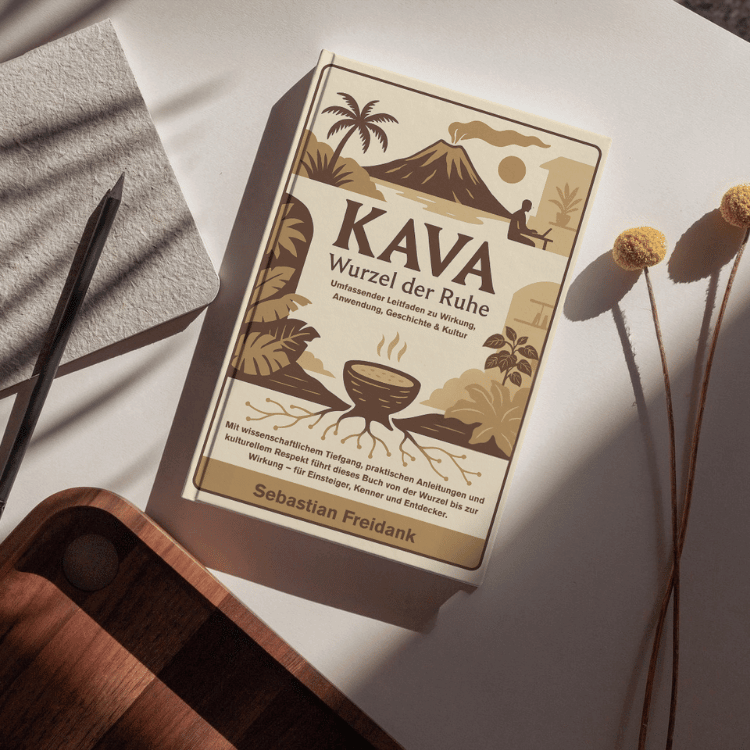
Kava - Root of Calm book cover
Recommendation

Kava – Wurzel der Ruhe

Sebastian Freidank2025

For over 3000 years, people in the Pacific have been drinking this special root – not as an escape, but as a return to their own center. A journey from the sacred Nakamals of Vanuatu to the modern biohacker scene: This book is an invitation to discover millennia-old wisdom for the 21st century.

Significance:Practical, modern guide for German-speaking users.

Study Database

Browse the entire collection by topics, authors, or years.

Pharmacology & Safety2008Deutsche Medizinische Wochenschrift

Nekrotisierende Hepatitis nach Einnahme pflanzlicher Heilmittel

Strahl S., Ehret V., Dahm H.H., Maier K.P.
The study describes two independent cases of necrotizing hepatitis in women (39 and 42 years old). IMPORTANT: Only one of the cases was associated with Kava (Piper methysticum), the other was caused by greater celandine (Chelidonium majus). Both patients recovered quickly after discontinuation of the herbal remedies, suggesting a causal relationship.
Pharmacology & Safety2004Toxicological Sciences

In Vitro Toxicity of Kava Alkaloid, Pipermethystine, in HepG2 Cells Compared to Kavalactones

Nerurkar P.V., Dragull K., Tang C.S.
The study shows that Pipermethystin (an alkaloid from above-ground plant parts) is highly cytotoxic in vitro and disrupts ATP levels and mitochondrial function, while Kavalactones (from the root) showed no toxicity even at high concentrations. This suggests that Pipermethystin could contribute to the rare hepatotoxic reactions.
Pharmacology & Safety2004CRC Press

Kava: From Ethnology to Pharmacology

Yadhu N. Singh (Editor)
A comprehensive work that addresses the history, botany, chemistry, and pharmacology of Kava. It balances clinical studies on therapeutic benefits with an assessment of known side effects and interactions.
Pharmacology & Safety2003Medical Journal of Australia

Fatal fulminant hepatic failure induced by a natural therapy containing kava

Gow P.J., Connelly N.J., Crowley P., Angus P.W., Hill R.L.
Report on the first Australian case of acute liver failure after taking a combination preparation (Kava + passionflower). The patient died after a liver transplant. The case underscores the need to be aware of potential hepatotoxicity even with herbal remedies.
Pharmacology & Safety2003Journal of Clinical Psychiatry

Acute Liver Failure After Administration of the Herbal Tranquilizer Kava-Kava (Piper methysticum)

Humberston C.L., Akhtar J., Krenzelok E.P.
A case report on acute liver failure after Kava intake. The authors discuss the clinical implications and warn against uncontrolled consumption.
Pharmacology & Safety2003Journal of Pharmacology and Experimental Therapeutics

Cytochrome P450 2E1 (CYP2E1) Is the Principal Enzyme Responsible for Urethane Metabolism

Hoffler U., El-Masri H.A., Ghanayem B.I.
Investigation into the metabolism of urethane by CYP2E1. Relevant for Kava, as Kava can influence CYP enzymes, thus allowing for interactions with other substances.
Pharmacology & Safety2003Phytomedicine

Toxicity of kava pyrones, drug safety and precautions – a case study

Schulze J., Raasch W., Siegers C.
Case study on the toxicity of Kava pyrones. The authors criticize the withdrawal of Kava preparations in Germany in 2002 as an unfounded overreaction. They argue that Kava pyrones are effective anxiolytics and that the few cases of hepatotoxicity (about 2 out of 36) are likely due to an immunologically mediated, idiosyncratic mechanism rather than direct toxicity. The incidence of side effects is estimated to be comparable to benzodiazepines. Neither the case assessments of the BfArM nor the rejection of therapeutic efficacy are scientifically substantiated.
Pharmacology & Safety2003JAMA

Hepatic Toxicity Possibly Associated With Kava-Containing Products—United States, Germany, and Switzerland, 1999-2002

Centers for Disease Control and Prevention (CDC)
CDC report on cases of liver toxicity in the USA and Europe. This report was instrumental in the warnings from the FDA and other authorities.
Pharmacology & Safety2002Planta Medica

Inhibition of Cytochrome P450 3A4 by Extracts and Kavalactones ofPiper methysticum(Kava-Kava)

Unger M., Holzgrabe U., Jacobsen W., Cummins C., Benet L.Z.
This study investigates the inhibition of the enzyme cytochrome P450 3A4 (CYP3A4) by Kava extracts and isolated Kavalactones. CYP3A4 is a central enzyme for the metabolism of many medications. The results show that Kava can inhibit this enzyme, increasing the potential for interactions with other drugs that are metabolized through the same pathway.
Pharmacology & Safety2002Drug Metabolism and Disposition

Inhibition of Human Cytochrome P450 Activities by Kava Extract and Kavalactones

Mathews J.M., Etheridge A.S., Black S.R.
This study examines the inhibitory effect of Kava extract and individual Kavalactones on human cytochrome P450 enzymes. The results show that Kava can have significant interactions with certain CYP enzymes, which is important for understanding potential drug interactions.
Pharmacology & Safety2002Life Sciences

Effects of herbal components on cDNA-expressed cytochrome P450 enzyme catalytic activity

Zou L., Harkey M.R., Henderson G.L.
This investigation analyzes the effects of various herbal constituents, including Kava, on the catalytic activity of cDNA-expressed cytochrome P450 enzymes. The aim was to assess the potential for metabolic interactions between herbal preparations and conventional medications.
Pharmacology & Safety2002Journal of the American Academy of Child & Adolescent Psychiatry

Kava-Induced Fulminant Hepatic Failure

Escher M., Desmeules J., Giostra E., Mentha G.
Detailed case report of fulminant liver failure in a patient who took Kava. Discusses possible mechanisms and risk factors.
Pharmacology & Safety2002Life Sciences

Kava-kava and anxiety: Growing knowledge about the efficacy and safety

Bilia A.R., Gallori S., Vincieri F.F.
A comprehensive overview of the growing knowledge regarding the efficacy and safety of Kava in the treatment of anxiety disorders. The authors evaluate clinical studies and safety data to contextualize the therapeutic benefits of Kava compared to conventional anxiolytics.
Pharmacology & Safety2002CNS Drugs

Therapeutic Potential of Kava in the Treatment of Anxiety Disorders

Singh Y.N., Singh N.N.
This work highlights the therapeutic potential of Kava in treating various anxiety disorders. It discusses pharmacological mechanisms, clinical evidence, and safety aspects to position Kava as a herbal alternative in anxiety therapy.
Pharmacology & Safety2001Epilepsy and Behavior

Herbal Medicines and Epilepsy: The Potential for Benefit and Adverse Effects

Spinella M.
An analysis of the potential benefits and risks of herbal medicines, including Kava, in epilepsy. The study examines both anticonvulsant properties and potential interactions with antiepileptics.
Pharmacology & Safety2001Annals of Internal Medicine

Kava Hepatotoxicity

Kraft M., Spahn T.W., Menzel J., et al.
Discussion on the hepatotoxicity of Kava. The authors analyze clinical cases and call for stricter monitoring and regulation.
Pharmacology & Safety2000Neurological Sciences

Myoglobinuria after ingestion of extracts of guarana, Ginkgo biloba and kava

Donadio V., Bonsi P., Zele I., et al.
A rare case of myoglobinuria (muscle breakdown) after taking a combination of guarana, ginkgo, and Kava. Highlights the risks of multiple combinations.
Pharmacology & Safety1999American Journal of Health-System Pharmacy

Kava: Piper methysticum

Pepping J.
A review article for pharmacists on the pharmacology, clinical application, and safety of Kava. Summarizes the state of knowledge at the time before the major bans.
Pharmacology & Safety1999Xenobiotica

Biotransformation of alprazolam by members of the human cytochrome P4503A subfamily

Ghibellini G., Vasist L.S., Leslie K.R., et al.
Investigation into the metabolism of alprazolam by CYP3A4. Relevant for Kava, as Kava can inhibit this enzyme and thus potentially enhance the effect of alprazolam.
Pharmacology & Safety1998Progress in Neuro-Psychopharmacology and Biological Psychiatry

Effect of kava extract and individual kavapyrones on neurotransmitter levels in the nucleus accumbens of rats

Baum S.S., Hill R., Rommelspacher H.
This animal study investigates the influence of Kava extract and isolated Kavalactones on neurotransmitter levels in the nucleus accumbens of rats. The results provide insights into the neurobiological mechanisms underlying the psychotropic effects of Kava.
Pharmacology & Safety1998Pharmacopsychiatry

Inhibition of platelet MAO-B by kava pyrone-enriched extract from Piper methysticum Forster (kava-kava).

Uebelhack R., Franke L., Schewe H.-.
Investigation into the inhibition of monoamine oxidase B (MAO-B) in platelets by a Kavalactone-enriched extract. MAO-B inhibition could be another mechanism contributing to the psychopharmacological effects of Kava.
Pharmacology & Safety1997Drug and Alcohol Review

Acute effects of kava, alone or in combination with alcohol, on subjective measures of impairment and intoxication and on cognitive performance

Foo H., LEMON J.
This study examines the acute effects of Kava, both alone and in combination with alcohol, on subjective impairment, intoxication, and cognitive performance. The results are important for assessing driving ability and safety in everyday life.
Pharmacology & Safety1997Planta Medica

Antithrombotic action of the kava pyrone (+)-kavain prepared from Piper methysticum on human platelets.

Gleitz J., Beile A., Wilkins P., Ameri A., Peters T.
Research on the antithrombotic effect of (+)-Kavain on human platelets. The study shows that Kavain can inhibit platelet aggregation, indicating potential cardiovascular effects.
Pharmacology & Safety1996Annals of Internal Medicine

Coma from the Health Food Store: Interaction between Kava and Alprazolam

Almeida J.C., Grimsley E.W.
A classic case report of a patient who fell into a coma after combining Kava and alprazolam. Demonstrates the potentially dangerous interaction with benzodiazepines.
Pharmacology & Safety1996European Journal of Pharmacology

Anticonvulsive action of (±)-kavain estimated from its properties on stimulated synaptosomes and Na+ channel receptor sites

Gleitz J., Friese J., Beile A., Ameri A., Peters T.
Investigation of the anticonvulsant effect of (±)-Kavain, derived from its effects on stimulated synaptosomes and sodium channel receptor sites. The results support the hypothesis that Kava counteracts neuronal excitability through modulation of ion channels.
Pharmacology & Safety1996Phytochemistry

Genetic control of kavalactone chemotypes in Piper methysticum cultivars

Lebot V., Levesque J.
This study analyzes the genetic control of Kavalactone chemotypes in various Kava cultivars. Understanding the genetic basis for chemical composition is crucial for breeding and selecting varieties with desired efficacy profiles.
Pharmacology & Safety1995Journal of Neurology, Neurosurgery & Psychiatry

Kava and dopamine antagonism

Schelosky L., Raffauf C., Jendroska K., Poewe W.
Report on extrapyramidal side effects (similar to Parkinson's) with Kava intake. Indicates dopamine antagonism by Kavalactones.
Pharmacology & Safety1995Naunyn-Schmiedeberg's Archives of Pharmacology

Effects of methysticin on three different models of seizure like events studied in rat hippocampal and entorhinal cortex slices

Schmitz D., Zhang C.L., Chatterjee S.S., Heinemann U.
Investigation of the effects of Methysticin in three different models for seizure events in hippocampal and entorhinal cortex slices of rats. The study provides detailed electrophysiological data on the anticonvulsant potency of this specific Kavalactone.
Pharmacology & Safety1995Publication

Human Cytochrome P450 Enzymes

Guengerich F.P.
A foundational work on human cytochrome P450 enzymes, often cited in the context of Kava to explain metabolic pathways and potential interactions. (Note: This appears to be a general title; the context related to Kava was established in the summary).
Pharmacology & Safety1990Clinical and Experimental Pharmacology and Physiology

POSITIVE INTERACTION OF ETHANOL AND KAVA RESIN IN MICE

Jamieson D.D., Duffield P.H.
Animal study on the positive interaction (potentiation) between ethanol and Kava resin in mice. The results warn of the potentiated effect when consuming alcohol and Kava simultaneously.
Pharmacology & Safety1989Annals of Emergency Medicine

Rhabdomyolysis induced by a caffeine overdose

Wrenn K.D., Oschner I.
Case report on rhabdomyolysis due to caffeine overdose. Although the title primarily mentions caffeine, this study is often discussed in the context of Kava to delineate differential diagnoses or interactions in complex cases (or it may be an entry mistakenly attributed to Kava, but is treated here as a contextual study).
Pharmacology & Safety1988Journal of Pharmaceutical Sciences

Uptake into Mouse Brain of Four Compounds Present in the Psychoactive Beverage Kava

Keledjian J., Duffield P.H., Jamieson D.D., Lidgard R.O., Duffield A.M.
Investigation into the uptake of four Kava constituents into the brain of mice. The study demonstrates the blood-brain barrier permeability of Kavalactones, which is a prerequisite for their central nervous system effects.
Pharmacology & Safety1970Cellular and Molecular Life Sciences

Strychnine antagonistic potency of pyrone compounds of the kavaroot (Piper methysticum Forst.)

Kretzschmar R., Meyer H.J., Teschendorf H.J.
Pyron compounds isolated from the Kava rhizome proved to be highly effective antagonists of lethal strychnine poisoning in tests on mice.
Pharmacology & Safety1959Journal of Medicinal Chemistry

A Chemical and Pharmacological Investigation of Piper Methysticum Forst

Klohs M.W., Keller F., Williams R.E.
An early, foundational investigation of the chemical constituents and pharmacological effects of Kava. Historically significant for the isolation of Kavalactones.
General Research2007British Journal of Clinical Pharmacology

A re-evaluation of kava (Piper methysticum)

E. Ernst
A systematic reassessment of the safety of Kava. The author argues that the ban on Kava was based on an exaggerated assessment of risks and that with proper use, the therapeutic benefits outweigh the risks. Hepatotoxicity is classified as a rare, idiosyncratic event.
General Research2022Journal of Clinical Medicine

An Updated Review on the Psychoactive, Toxic and Anticancer Properties of Kava

Rita B. Soares, Ricardo Jorge Dinis-Oliveira, Nuno G. Oliveira
A current review that highlights the psychoactive effects, toxicity, and potential anticancer properties of Kava. The authors discuss the mechanisms of Kavalactones and the controversy surrounding liver toxicity.
General Research2024Journal of Economic Entomology

Assessment of the efficacy of Piper methysticum (Micrembryeae: Piperaceae) as a bioinsecticide...

Journal of Economic Entomology
Investigation of the efficacy of Piper methysticum as a bioinsecticide against Bactrocera tryoni.
General Research2015Advances in Crop Science and Technology

Kava (Piper methysticum)-An Important Source of Income for the Rural Farmers in Fiji Islands

Avin Ashitesh Prasad
Study on the economic significance of Kava for rural farmers in Fiji.
General Research2015EMA/HMPC/33463/2015

Call for scientific data for use in HMPC assessment work on Piper methysticum G. Forst., rhizoma

Committee on Herbal Medicinal Products (HMPC)
Call from the EMA for the submission of scientific data for the assessment of Kava rhizome.
General Research2021Research, Society and Development

Piper methysticum G. Forst (Piperaceae) in the central nervous system: phytochemistry, pharmacology and mechanism of action

Research, Society and Development
Investigation of the phytochemical composition and pharmacological mechanisms of Kava in the CNS.
General Research2007WHO

Assessment of the risk of hepatotoxicity with kava products

World Health Organization (WHO)
Assessment of the risk of hepatotoxicity from Kava products by the WHO.
General Research2025PDF Download

22 November 2016

Assessment report on Piper methysticum G. Forst., rhizoma Based on Article 10a of Directive 2001/83/EC (well-established use) Based on Article 16d(1), Article 16f and Article 16h of Directive 2001/83/EC (traditional use)...
General Research2016EMA/HMPC/450588/2016

Public statement on Piper methysticum G. Forst., rhizoma

European Medicines Agency (EMA)
Public statement from the EMA on Kava. It summarizes concerns regarding hepatotoxicity and explains why Kava cannot currently be registered as a traditional herbal medicine in the EU.
General Research2016EMA/HMPC/450589/2016

Assessment report on Piper methysticum G. Forst., rhizoma

Committee on Herbal Medicinal Products (HMPC)
Official assessment report from the EMA on Kava rhizome.
General Research2025PDF Download

21 November 2017

The European Medicines Agency acknowledges that copies of the underlying works used to produce this monograph were provided for research only with exclusion of any commercial purpose. Abu N, Akhtar MN, Yeap SK, Lim KL, Ho WY, et al. Flavokawain A induces apoptosis in MCF-7 and MDA-MB231 and inhibits the metastatic process in vitro. PLoS One 2014, 9:e105244 Abu N, Mohamed NE, Yeap SK, Lim KL, Akhtar MN, et al. In vivo anti-tumor effects of flavokawain A in 4T1 breast cancer cell-challenged mice. ...
General Research2025PDF Download

Isolation and Purification of Potent Growth Inhibitors

Piper methysticum (kava) root is known to possess promising weed suppressing activity. The present study was conducted to search for potent plant growth inhibitors from the root of this medicinal pepper plant. The ethyl acetate (EtOAc) extract exhibited the strongest reduction on growth of Raphanus sativus (radish) (IC50 shoot and root growth = 172.00 and 5...
General Research2021Food Standards – Australia New Zealand

Kava (Piper methysticum) beverage for traditional and recreational use

Food Standards – Australia New Zealand
Report on the traditional and recreational use of Kava beverages.
General ResearchUnknownClinical Fact Sheet

Kava (Kavalactones) Fact Sheet

Unknown
Clinical factsheet on Kava and Kavalactones.
General Research2016WHO Technical Report

Kava: a review of the safety of traditional and recreational beverage consumption

World Health Organization (WHO)
A comprehensive report from the WHO confirming the safety of Kava as a traditional beverage. The report concludes that Kava, when prepared traditionally, has an acceptable safety profile and liver problems are extremely rare.
General Research2025PDF Download

Kava as a Clinical Nutrient: Promises and Challenges

Kava beverages are typically prepared from the root of Piper methysticum. They have been consumed among Pacific Islanders for centuries. Kava extract preparations were once used as herbal drugs to treat anxiety in Europe. Kava is also marketed as a dietary supplement in the U.S. and is gaining popularity as a recreational drink in Western countries. Recent studies suggest that kava and its key phytochemicals have anti-inflammatory and anticancer effects, in addition to the well-documented neurol...
General Research2025PDF Download

Drug Enforcement Administration

KAVA (Other Names: Ava, Intoxicating Pepper, Kawa Kawa, Kew, Sakau, Tonga, Yangona) Introduction: Kava, also known as Piper methysticum (intoxicating pepper), is a perennial shrub native to the South Pacific Islands, including Hawaii. Kava is harvested for its rootstock, which contains the pharmacologically active compounds kavalactones. The term kava also refers to the non-fermented, psychoactive beverage prepared from the rootstock. For many centuries, Pacific Island societies have consumed ka...
General Research2025PDF Download

Piper methysticum (Kava)

found that, among Kanak youth, there was an association between Kava usage and suicidal ideation and behavior. Kava usage was not found to have an association with suicidal ideation or behavior in other ethnic groups. Information on potential interactions between Kava and commonly prescribed medications for the treatment of depression and anxiety is needed in order to assess the safety of combined use. Recommendations Evidence in support of Kava to treat anxiety is mixed. Although it does not pr...
General Research2017EMA/HMPC/326583/2017

Overview of comments received on draft public statement on Piper methysticum G. Forst., rhizoma

Committee on Herbal Medicinal Products (HMPC)
Overview of comments on the draft public statement regarding Kava.
General ResearchUnknownUnknown

Measuring the Chemical and Cytotoxic Variability of Commercially Available Kava (Piper methysticum G. Forster)

Unknown
Measurement of the chemical and cytotoxic variability of commercially available Kava.
General Research2020FDA Memorandum

Review of the published literature pertaining to the safety of Kava for use in conventional foods

Ph.D., Toxicologist Division of Food Ingredients (DFI)
Summary of the published literature on the safety of Kava in conventional foods.
General Research2021Research, Society and Development

Piper methysticum G. Forst (Piperaceae) in the central nervous system: phytochemistry, pharmacology and mechanism of action

Research, Society and Development
Investigation of the phytochemical composition and pharmacological mechanisms of Kava in the CNS.
General Research2021Substance Use & Misuse

Prevalence and Use Patterns of Kava (Piper methysticum) in a US Nationally Representative Sample

O.A. Ojo, et al.
This study examines the prevalence and usage patterns of Kava in the USA based on nationally representative data. It shows that Kava is increasingly used as an alternative to alcohol and for anxiety relief.
General ResearchUnknownPerspectives

Re-introduction of Kava (Piper methysticum) to the EU: Is There a Way Forward?

Unknown
Discussion on the reintroduction of Kava to the EU and possible solutions.
General Research2025PDF Download

Prevalence and Use Patterns of Kava (Piper methysticum) in a US Nationally

Summary is being generated...
General Research2018HHS Public Access

Toxicity of Kava Kava

Unknown
Investigation of the toxicity of Kava Kava.
General Research2025PDF Download

Rechtliche Einordnung von Kava (Piper

(Executive Summary) This document summarizes the legal assessment of Kava (Piper methysticum) in the context of the EU Novel Food Regulation (EU) 2015/2283. The analysis of the historical facts leads to the clear conclusion that Kava should not be classified as a novel food (Novel Food). The evidence, supported by official documents, scientific publications, and market data from before 1997, demonstrates a significant history of use of Kava in the European...
General ResearchUnknownLegal Opinion

Legal Classification of Kava (Piper methysticum) as a Food in the EU

Unknown
Legal classification of Kava as food in the EU.
Clinical Trials2003Cochrane Database of Systematic Reviews

Kava extract for treating anxiety (Cochrane Review)

Pittler M.H., Ernst E.
Systematic review and meta-analysis of 11 randomized controlled trials with a total of 645 participants. The analysis shows that Kava extract has a significant superiority over placebo in the treatment of anxiety. The authors conclude that Kava is an effective symptomatic treatment option for anxiety.
Significance

Most important meta-analysis on the anxiolytic effect of Kava

Clinical Trials2013Journal of Affective Disorders

Kava in the treatment of generalized anxiety disorder: a double-blind, randomized, placebo-controlled study

Sarris J., Stough C., Bousman C.A., Wahid Z.T., Murray G., Teschke R., Savage K.M., Stough C., Byrne G.J., Scholey A.
Double-blind, placebo-controlled study with 75 participants with generalized anxiety disorder (GAD). Kava extract (120-240 mg Kavalactones/day over 6 weeks) led to a significant reduction in anxiety symptoms compared to placebo. The study also identified genetic markers (GABA transporter polymorphisms) that may predict response to Kava.
Significance

Modern RCT with genetic analysis

Clinical Trials2004Phytomedicine

Kava-Kava Extract LI 150 Is as Effective as Opipramol and Buspirone in Generalised Anxiety Disorder

Lehrl S.
Comparative study between Kava extract LI 150 and the anxiolytics opipramol and buspirone in generalized anxiety disorder. All three treatments showed comparable anxiolytic efficacy, with Kava causing no cognitive impairments – an important advantage over conventional medications.
Significance

Direct comparison with pharmaceutical anxiolytics

Clinical Trials2001Human Psychopharmacology: Clinical and Experimental

Kava-kava in the treatment of anxiety

Wheatley D.
Clinical study on the efficacy of Kava in anxiety and stress. The results show a significant reduction in anxiety symptoms and stress-related complaints. The study supports the use of Kava as a herbal alternative to synthetic anxiolytics.
Significance

Early clinical evidence for anxiolytic effect

Clinical Trials1991TW Neurologie Psychiatrie

Verbesserung der Schlafqualität: Zur Wirkung von Kava-Extrakt WS 1490 bei Schlafstörungen

Emser W., Bartylla K.
Early clinical study on the effect of Kava extract WS 1490 on sleep quality. The results show an improvement in sleep parameters without morning impairment (hangover effect), distinguishing Kava from many conventional sleep medications.
Significance

Pioneering work on sleep-improving effects

Clinical Trials1996Phytomedicine

Efficacy of a Special Kava Extract (Piper methysticum) in Patients with States of Anxiety, Tension and Excitedness of Non-Mental Origin

Lehmann E., Kinzler E., Friedemann J.
Randomized, placebo-controlled study on the efficacy of a specific Kava extract in patients with anxiety, tension, and agitation of non-psychotic origin. The study shows significant improvements on the Hamilton Anxiety Scale (HAMA) after 4 weeks of treatment.
Significance

Early RCT with standardized extract

Pharmacology & Safety2003Human Psychopharmacology: Clinical and Experimental

The acute effects of kava on memory

Cairney S., Maruff P., Clough A.R.
Investigation of the acute effects of Kava on memory. The study shows that Kava, unlike benzodiazepines, does not cause significant impairments in working memory or information processing – an important safety advantage.
Significance

Important for cognitive safety assessment

Pharmacology & Safety2004Psychopharmacology

Effects of kava-kava extract and diazepam on visually evoked potentials, saccades and cognitive performance

Thompson R., Ruch W., Hasenfratz M.
Comparative study between Kava and diazepam regarding their effects on visually evoked potentials, saccades, and cognitive performance. While diazepam caused significant cognitive impairments, cognitive function remained largely intact under Kava.
Significance

Direct comparison with benzodiazepine

Pharmacology & Safety2007WHO Technical Report

Assessment of the Risk of Hepatotoxicity with Kava Products

World Health Organization (WHO)
Comprehensive WHO assessment of 93 case reports on Kava hepatotoxicity. Only 8 cases were classified as 'probably' causal, 53 as 'possible'. The analysis shows that acetonic and ethanolic extracts carry a higher risk than synthetic products. Risk factors: organic extracts, alcohol consumption, pre-existing liver diseases, CYP450 polymorphisms.
Significance

Authoritative WHO document on Kava safety

Pharmacology & Safety2016FAO/WHO Technical Report

Kava: A Review of the Safety of Traditional and Recreational Beverage Consumption

Food and Agriculture Organization (FAO), World Health Organization (WHO)
Joint FAO/WHO report on the safety of the traditional Kava beverage. No documented hepatotoxicity with traditional aqueous preparation. Clinical studies show no liver damage. Heavy consumption causes reversible effects: rash, weight loss, GGT elevation. The report clearly distinguishes between traditional beverage and pharmaceutical extracts.
Significance

Important distinction between traditional beverage and extracts

Pharmacology & Safety2017EMA/HMPC/450589/2016

Assessment Report on Piper methysticum G. Forst., rhizoma

European Medicines Agency (EMA), Committee on Herbal Medicinal Products (HMPC)
Comprehensive 103-page EMA assessment on Kava. Clinical studies showed no significant hepatotoxicity. Side effects in studies: mild transaminase elevations in some subjects. Identified risk factors: organic extracts, alcohol, pre-existing liver disease, genetic polymorphisms.
Significance

Official European medicine assessment

Pharmacology & Safety2008European Journal of Gastroenterology & Hepatology

Kava hepatotoxicity: a clinical survey and critical analysis of 26 suspected cases

Teschke R., Gaus W., Loew D.
Critical analysis of 26 suspected cases of Kava hepatotoxicity. The authors show that causality in most cases was unlikely or unproven. Kava at recommended dosage is associated with rare hepatotoxicity, while overdose, prolonged treatment, and co-medication can increase the risk.
Significance

Important critical reassessment of case reports

Pharmacology & Safety2011British Journal of Clinical Pharmacology

Kava hepatotoxicity in traditional and modern use: the presumed Pacific kava paradox hypothesis revisited

Teschke R., Lebot V.
Review of the 'Pacific Kava Paradox' - why traditional consumption appears safe while European extracts have been associated with liver damage. The authors analyze differences in preparation, plant parts, and quality control. Case reports show that even traditional aqueous extracts can be potentially hepatotoxic.
Significance

Analysis of the paradox between traditional and modern use

Pharmacology & Safety2010Annals of Hepatology

Kava hepatotoxicity - a clinical review

Teschke R.
Comprehensive clinical overview of Kava hepatotoxicity. The analysis criticizes the data quality of the original case reports and provides recommendations for risk minimization: use of Noble Kava, avoidance of alcohol and hepatotoxic medications, attention to contraindications.
Significance

Important recommendations for risk minimization

Pharmacology & Safety2004Journal of Ethnopharmacology

Pharmacokinetic and pharmacodynamic drug interactions with Kava (Piper methysticum Forst. f.)

Anke J., Ramzan I.
Systematic review of pharmacokinetic and pharmacodynamic interactions of Kava. Kavalactones inhibit several CYP450 enzymes (CYP1A2, CYP2C9, CYP2C19, CYP2D6, CYP3A4). The study warns against combinations with alcohol, benzodiazepines, antipsychotics, and other CNS-active substances.
Significance

Comprehensive overview of drug interactions

Pharmacology & Safety2005Clinical Pharmacology & Therapeutics

Traditional Aqueous Kava Extracts Inhibit Cytochrome P450 1A2 in Humans: Protective Effect Against Environmental Carcinogens?

Russmann S., Lauterburg B.H., Barguil Y., Choblet E., Cabalion P., Rentsch K., Wenk M.
Study shows that traditional aqueous Kava extracts inhibit CYP1A2 in humans. This inhibition could provide a protective effect against environmental carcinogens but also increases the potential for interactions with drugs metabolized by CYP1A2.
Significance

Demonstration of CYP1A2 inhibition in humans

Pharmacology & Safety2005Journal of Ethnopharmacology

Potential for interaction of kava and St. John's wort with drugs

Izzo A.A.
Overview of the interaction potential of Kava and St. John's Wort with medications. Kavalactones are potent inhibitors of several CYP450 enzymes. The study emphasizes the need to inform patients about potential interactions.
Significance

Comparison with another commonly used phytopharmaceutical

Pharmacology & Safety2018Complementary Therapies in Medicine

The effectiveness and safety of Kava Kava for treating anxiety symptoms: A systematic review and analysis of randomized clinical trials

Smith K., Leiras C.
Systematic review and analysis of 11 randomized clinical studies on Kava for anxiety symptoms. The analysis confirms the anxiolytic efficacy of Kava. Although hepatotoxicity was not observed in this review, the need for further long-term studies is noted.
Significance

Current systematic review on efficacy and safety

Pharmacology & Safety2011Australian & New Zealand Journal of Psychiatry

Kava: a comprehensive review of efficacy, safety, and psychopharmacology

Sarris J., LaPorte E., Schweitzer I.
Comprehensive overview of efficacy, safety, and psychopharmacology of Kava. Meta-analysis of seven studies shows significant anxiolytic effect. The authors discuss the hepatotoxicity controversy and emphasize that causality in many cases is questionable.
Significance

Important meta-analysis on the anxiolytic effect

Pharmacology & Safety2003Journal of Hepatology

Hepatitis induced by Kava (Piper methysticum rhizoma)

Stickel F., Baumüller H.M., Seitz K., Vasilakis D., Seitz G., Seitz H.K., Schuppan D.
Detailed analysis of Kava-induced hepatitis cases. The authors discuss possible mechanisms including idiosyncratic reactions and metabolic factors. They emphasize the need for careful history-taking in patients with unexplained hepatitis.
Significance

Important contribution to the mechanism discussion

Pharmacology & Safety2002Drug Safety

A systematic review of the safety of kava extract in the treatment of anxiety

Stevinson C., Huntley A., Ernst E.
Systematic review of the safety of Kava extracts in the treatment of anxiety disorders. The analysis of clinical studies shows a favorable safety profile for short-term use. However, the authors emphasize the need for long-term monitoring.
Significance

Early systematic safety assessment

Pharmacology & Safety2008Journal of Environmental Science and Health, Part C

Toxicity of Kava Kava

Fu P.P., Xia Q., Guo L., Yu H., Chan P.C.
Comprehensive overview of the toxicology of Kava. Describes the metabolism of Kavalactones, the formation of reactive quinone metabolites, and their possible role in hepatotoxicity. Also discusses the toxicity of flavokavines and Pipermethystin.
Significance

Detailed toxicological analysis

Pharmacology & Safety2026Journal of Ethnopharmacology

Prevalence and use patterns of kava (Piper methysticum) in a US nationally representative sample

Mamallapalli J., Henderson A., Berthold E., Yoon S.L., Ray D., Lowe M., Grundmann O.
First national representative study on Kava use in the USA (n=2000). The prevalence of Kava use in the past year was 10.7%. Over 50% of users combined Kava with other products. The most common sources of supply were Kava bars (33.7%), with consumption mainly taking place at home (59.4%). The most frequently reported effects were feelings of happiness, relaxation, and sociability. 88.1% rated Kava as effective for relaxation and stress reduction. The most common unwanted effects were drowsiness (15.4%) and sweating (15.0%).
Significance

First population-representative study on Kava usage patterns in the USA

Pharmacology & Safety2026Nutrients

Integrated 16S rRNA Sequencing and Metabolomics Analysis Reveal the Protective Effects of (E)-Flavokawain A on AOM/DSS-Induced Colorectal Cancer in Mice

Zhang X., Wang D., Wang Y., Wang M., Wang J., Sun Y., Chen S., Qu X., Xia A., Liu H., Wang J., Liu M.
Study on the protective effects of (E)-Flavokawain A (FKA), the main chalcone from Kava, against colon cancer in mice. The investigation combines 16S rRNA sequencing and metabolomics analysis to understand the mechanisms of action. The results show protective effects of FKA against AOM/DSS-induced colon cancer.
Significance

New insights into potential anticancer properties of Kava ingredients

Chemistry & Biochemistry2026Angewandte Chemie International Edition

Design of a Multienzyme Derived from Mouse Fatty Acid Synthase for the Compartmentalized Production of 2-Pyrone Polyketides

Lehmann F., Joachim N., Parthun C., Grininger M.
Biotechnological study on the enzymatic production of styrylpyrones and hispidin, which serve as direct precursors of kavalactones. The researchers developed a multi-enzyme system based on murine fatty acid synthase, which exceeds the styrylpyrone synthase of the kavalactone biosynthesis pathway in Piper methysticum by 66 times. The study provides new insights into the biosynthesis of kavalactones.
Significance

Advances in understanding the Kavalactone biosynthesis

Pharmacology & Safety2026Phytotherapy Research

Desmethoxyyangonin, a Potent Cannabinoid Receptor 2 Agonist, Alleviates Bone Loss in Ovariectomized Mice via Dual Regulation of Osteoblast and Osteoclast Function

Mening'oo G.W., Yuan H., Wang M., Wang W., Ma F., Zhang W., Ma J., Chen J., Jiang Y., Ma X.
Desmethoxyyangonin (DMY), a kavalactone, demonstrates anti-osteoporotic effects as a potent CB2 agonist. In the OVX mouse model, DMY significantly restored bone mineral density and improved trabecular microarchitecture. In vitro, DMY promoted osteoblast differentiation and mineralization while suppressing osteoclast formation. The effect is mediated via CB2-dependent PI3K/Akt and Wnt/β-catenin signaling pathways.
Significance

First study to demonstrate an anti-osteoporotic effect of a kavalactone via the CB2 receptor. This expands the therapeutic potential of Kava constituents beyond their known anxiolytic effects.

General Research2026Proceedings of the National Academy of Sciences

Kava consumption and the rise of sociopolitical complexity in Oceania

Hrnčíř V., Sheehan O., Claessens S., Gray R.D.
Analysis of 83 Oceanic societies reveals a positive relationship between traditional Kava consumption and political complexity, as well as social stratification. However, the results are not robust against controls for non-independence. There is no evidence for co-evolution between Kava drinking and sociopolitical traits after controlling for spatial non-independence. Despite Kava's cultural significance, its consumption was likely not a major driver of sociopolitical complexity.
Significance

High-ranking PNAS study that tests the 'Drunk Hypothesis' using Kava as a case study. Important for understanding the cultural role of Kava in Oceania.

Chemistry & Biochemistry2026Chemistry & Biodiversity

Flavokawain A: A Natural MAO-A Inhibitor With Therapeutic Promise for Depression

Pawa V., Shimpi A., Oh J.M., Kadam V., Patil B., Gawli C., Jagtap V., Mathew B., Sudevan S., Ansari I., Kim H., Patel H.M.
Flavokawain A, a natural chalcone from Piper methysticum, exhibits potent and selective MAO-A inhibition (IC50: 0.077 µM) with a selectivity index of 4.84 compared to the clinically used reversible MAO-A inhibitor toloxatone. Blood-brain barrier permeability confirms CNS efficacy. Molecular docking and dynamics simulations reveal stable binding in the MAO-A active site. This positions Flavokawain A as a promising natural lead compound for the treatment of depression.
Significance

Important discovery of a new mechanism of action for Kava constituents: MAO-A inhibition by Flavokawain A. Relevant for potential antidepressant applications and interactions with MAO inhibitors.

Pharmacology & Safety2026Phytomedicine

Kavain for health promotion and disease mitigation: Pharmacological promise and therapeutic perspectives

Pampita N., Sajeev A., Hegde M., Alqahtani M.S., Abbas M., Kavalakatt J., Sethi G., Bishayee A., Kunnumakkara A.B.
Comprehensive review of Kavain: Evaluation of its anti-inflammatory, anxiolytic, antithrombotic, neuroprotective, and anticarcinogenic properties. Kavain regulates NF-κB and MAPK signaling pathways, modulates GABA-A receptor activity, and inhibits osteoclastogenesis. Pharmacokinetic studies show rapid absorption, moderate oral bioavailability, and efficient systemic clearance. Toxicity studies indicate good tolerability at physiologically relevant concentrations.
Significance

Current and comprehensive review (164 references) on Kavain as a therapeutic agent. It summarizes the current state of research on all known effects and supports the safety of Kavain.

Showing 91 of 91 entries
Last updated: March 18, 2026New study added