
The Chemotype System
How to read the 6-digit code and classify the expected effect profile along with variety, origin, and batch analysis.
Contents
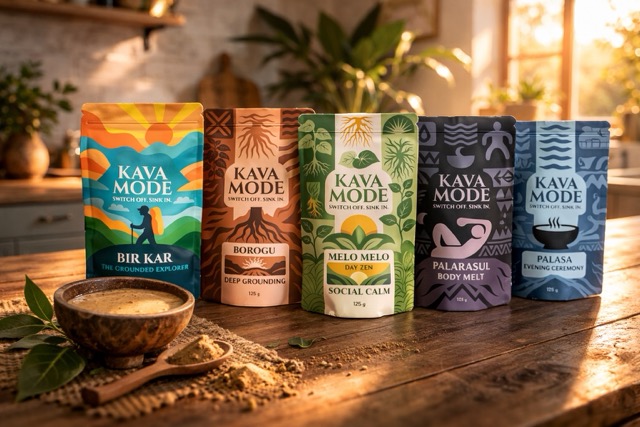
Premium Noble Kava
Discover certified quality and purity with our official partner.
Visit Kava-mode.comBrief & Concise
The Chemotype is a 6-digit code that lists the six main kavalactones in descending order of their concentration. It does not contain exact percentage values but provides useful guidance on which kavalactones can particularly shape the profile.
The system established by Vincent Lebot is an important tool for classification and quality control. For classification as Noble or Tudei and for a reliable expectation of effects, variety identity, plant parts, origin, processing, batch analysis, and experience are also considered.
The Numbering of Kavalactones
Each of the six main kavalactones is assigned a digit. This assignment is historically based and follows the order of their discovery or chromatographic elution:
| Digit | Kavalactone | Abbreviation | Main Effect |
|---|---|---|---|
| 1 | Desmethoxyyangonin | DMY | Focus, Motivation, Social Openness |
| 2 | Dihydrokavain | DHK | Muscle Relaxation, Analgesia |
| 3 | Yangonin | Y | Mood Enhancement, Light Euphoria; CB1 Affinity in vitro |
| 4 | Kavain | K | Anxiolytic, "Heady" Effect |
| 5 | Dihydromethysticin | DHM | Deep, body-focused, and often longer-lasting relaxation |
| 6 | Methysticin | M | Sedating, Neuroprotective |
Reading a Chemotype
The chemotype is written as a 6-digit number, with each position indicating the relative concentration:
Examples & Interpretation
Kavain-Dominated Example Profile
Kavain is in first place, Dihydrokavain in second; followed by Methysticin and Dihydromethysticin. In practice, this ranking often corresponds to clear, focused relaxation with noticeable physical calm.
DHK-Dominated Example Profile
Dihydrokavain > Kavain > Methysticin > Dihydromethysticin > Yangonin > Desmethoxyyangonin
DHM-Dominated Example Profile
DHM (5) in first place indicates a significantly heavier, body-focused, and potentially longer-lasting profile. Such profiles are often described as associated with fatigue, nausea, or a lingering feeling the next day.
DHK/DHM-Dominated Example Profile
DHK (2) and DHM (5) at the top indicate a strongly body-related and rather heavy effect. Whether the sample is Noble or Tudei must be clarified through variety identity and quality data.
Noble Kava vs. Tudei Kava
The distinction between Noble Kava (Noble Kava) and Tudei Kava (Two-Day Kava) is important for Kava quality. Tudei profiles are traditionally described as heavier and longer-lasting; however, safe classification requires variety identity and quality data, not just a sequence of digits.
| Criterion | Noble Kava | Tudei Kava |
|---|---|---|
| Chemotype Start | Often 4- or 2-dominated; chemotype alone is not proof | Often higher DHM content; variety and quality testing required |
| Onset of Effects | Often perceived faster in reports | Sometimes perceived delayed in reports |
| Duration of Effects | Often described as moderate and well-fading | Often described as significantly longer and lingering |
| Character of Effects | Clear, relaxed, social | Dull, sedating, groggy |
| Side Effects | Usually well-tolerated with appropriate quality and preparation | Often associated with nausea, headaches, or lingering feelings |
| Export Approval | Yes (regulated) | No (prohibited in Vanuatu) |
| Example Varieties | Borogu, Melo Melo, Kelai, Bir Kar | Isa, Palimanu, Wildkava |
Indicators of Tudei-like Profiles
The chemotype can provide clues but does not replace variety and batch testing:
Indicators for a More Accurate Examination
- 5 in position 1 or 2
- 5 before 4 in the chemotype
- Very high total DHM content (>15%)
Common Features of Esteemed Noble Profiles
- Documented Noble variety identity
- Suitable underground plant parts and traceable origin
- Batch analysis or COA with plausible quality values
Effect Profiles by Chemotype
In practice and reports, Kava profiles are often described as Heady, Heavy, or Balanced. The chemotype supports this classification but does not solely determine it:
Heady Kavas
Not solely derivable from an initial digitHeady profiles are described as providing clear, mental relaxation, focus, talkativeness, and a pleasant mood enhancement. A high relative Kavain content often fits this impression.
Ideal for:
- • Social occasions and conversations
- • Creative work
- • During the day or early evening
- • Beginners (milder effect)
Practice: The specific variety and batch should be described sensorily and analytically.
Heavy Kavas
Not solely derivable from an initial digitHeavy profiles are described with pronounced physical calm, noticeable muscle relaxation, and stronger evening or sleep proximity. DHK, Methysticin, and DHM can contribute to this overall impression.
Ideal for:
- • Evening relaxation
- • Stress relief and muscle relaxation
- • Preparing for sleep
- • Experienced Kava drinkers
Practice: The specific variety and batch should be described sensorily and analytically.
Balanced Kavas
Not solely derivable from a single codeBalanced profiles combine mental clarity and friendly mood with noticeable physical relaxation. They are often experienced as versatile and suitable for everyday use.
Ideal for:
- • Daily use
- • Meditation and mindfulness
- • Versatile use (day or evening)
- • All experience levels
Practice: The specific variety and batch should be described sensorily and analytically.
Chemotype & Quality Control
The chemotype is an important instrument for quality control in international Kava trade. It becomes meaningful when combined with variety identity, plant parts, origin, processing, and batch-related laboratory values.
The Kava Act of Vanuatu stipulates that only Noble Kava varieties are approved for export. Tudei varieties and their mixtures are excluded from export. Compliance is verified through chemotype analyses.
This is one of the reasons why Kava from Vanuatu is considered particularly high quality – there are government quality controls aimed at preventing Tudei contamination.
Tip for Consumers: Reputable Kava vendors provide the chemotype of their products or can disclose it upon request. If a vendor cannot provide chemotype information, caution is advised.
Proceed to the next category:
Varieties & Strains
Over 80 documented Kava varieties and their properties
Based on studies by

CIRAD, French Agricultural Research Centre for International Development
View profile →With contributions from
This wiki is a curated resource that synthesizes research from peer-reviewed studies and expert researchers. It is not written by the researchers listed above, but rather based on their published work.
Scientific Sources
The information on this page is based on the following scientific studies and publications:
Measuring the Chemical and Cytotoxic Variability of Commercially Available Kava (Piper methysticum G. Forster)
Unknown (Unknown) – Unknown
View studyKava: The Pacific Elixir - The Definitive Guide to Its Ethnobotany, History, and Chemistry
Vincent Lebot, Mark Merlin, Lamont Lindstrom (1997) – Yale University Press
View studyContents
Premium Noble Kava
Discover certified quality and purity with our official partner.
Visit Kava-mode.com
Kava – Root of Calm
The comprehensive guide to effects, history & culture.