
Table of Contents
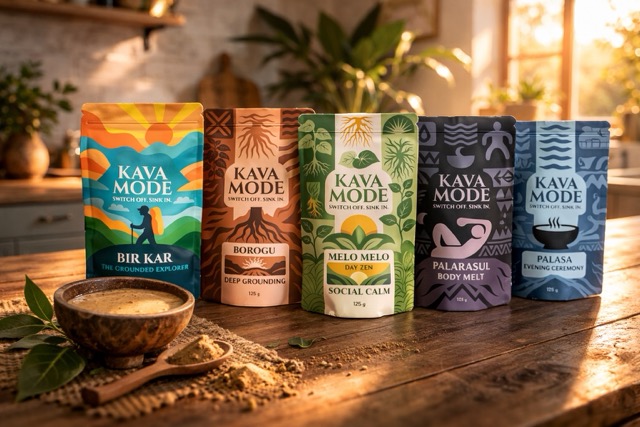
Premium Noble Kava
Discover certified quality and purity with our official partner.
Visit Kava-mode.comBrief & Concise
The Nakamal is much more than just a place to drink Kava – it is the heart of social life in Vanuatu and a model for Kava bars worldwide.
In Melanesian culture, the Nakamal serves as a gathering house, community center, and spiritual place at the same time. Here, conflicts are resolved, stories are told, alliances are forged, and the connection to ancestors is maintained.
Today, alongside the traditional Nakamals in Vanuatu, there are modern Kava bars in Port Vila, Suva, Auckland, and even in Western cities like Melbourne, Los Angeles, and Berlin. All share common principles: tranquility, respect, and community.
The Traditional Nakamal
In traditional village communities of Vanuatu, the Nakamal is the central meeting place – a place often reserved for men (although this is changing in urban areas).
Functions of the Nakamal
Daily meeting place for villagers after work
Disputes are peacefully settled here under the influence of Kava
Important village decisions are discussed in the Nakamal
Communication with ancestor spirits through ritual Kava ceremonies
Oral transmission of history, myths, and custom
Welcoming guests and sealing alliances
Traditionally, the Nakamal is a male space. In many villages, women are forbidden to enter the Nakamal or drink Kava. However, this tradition varies from island to island and is increasingly relaxed in urban areas.
Atmosphere & Rules
A Nakamal is a place of calm and contemplation. The atmosphere is fundamentally different from Western bars.
The Rules of the Nakamal
Loud conversations and laughter are inappropriate – one speaks in hushed tones
Kava makes the eyes sensitive to light ("Kava eyes") – bright light is avoided
Silence or soft traditional sounds are the norm
Fighting and aggressive behavior are taboo
Traditionally, no food is consumed in the Nakamal – Kava is drunk on an empty stomach
One stays for a while and drinks several bowls before leaving
The Sensory Experience
Twilight, often only candles or dim lamps
Muffled voices, chirping crickets, soft clinking of coconut shells
Earthy Kava scent, mixed with tropical night air
The peppery, earthy flavor of fresh Kava
The growing relaxation, the feeling of community
Architecture of the Nakamal
Traditional Nakamals are simple yet functional structures that adapt to the tropical environment.
Typical Elements
Palm leaf or corrugated iron roof for protection from rain
Good ventilation through open or semi-open walls
In some Nakamals for warmth and light
Simple seating made of wood or woven mats
Area with mortar, strainer, and water container
Area or trough for spitting between bowls
Tanna Style
On Tanna, Nakamals are often round structures made of natural materials that harmoniously blend into the landscape. The sacred banyan tree often stands nearby.
Urban Style
In Port Vila, Nakamals range from simple huts to concrete structures with neon lights – the atmosphere remains traditional.
Modern Kava Bars
Outside of Vanuatu, the Nakamal concept has evolved into modern Kava Bars – places that combine traditional values with contemporary comfort.
Types of Kava Bars
Traditional atmosphere with fresh Kava, simple decor, and local clientele
Run by Pacific communities, meeting place for expatriates, traditional and modern elements
Modern ambiance, often with Kava cocktails, café atmosphere, for Western audience
Combination of café and Kava bar, often with tea, coffee, and Kava mixes
Traditional vs. Modern
| Aspekt | Traditionell | Modern |
|---|---|---|
| Preparation | Freshly prepared, often chewed or ground | Often instant Kava or pre-prepared |
| Atmosphere | Very quiet, dim lighting | Relaxed, but often more entertainment |
| Audience | Local community, often only men | Mixed audience, all genders |
| Additional Offerings | Only Kava | Often snacks, other drinks, sometimes food |
| Prices | Very inexpensive (50-100 Vatu per bowl) | Higher ($5-15 per bowl) |
Regional Differences
Kava drinking places vary by region in atmosphere and tradition.
Vanuatu
NakamalThe origin – traditional village Nakamals and modern urban variants in Port Vila. Strongest Kava, most authentic experience.
Fiji
Kava CircleLess institutionalized than in Vanuatu – Kava is drunk in homes, at gatherings, and in informal groups.
Tonga
FaikavaMore structured than in Fiji – the Tu'i Kava leads the ceremony. Also drunk in modern "Kalapu" (clubs).
Samoa
'Ava CircleFormal ceremonies with the Taupou as the preparer. Modern variants in "Kava Bars" in Apia.
USA
Kava BarWestern style with café atmosphere. Particularly popular in Florida and California. Often combined with Kratom.
New Zealand
Kava ClubRun by Pacific communities. Important meeting place for Tongans, Samoans, and Fijians in Auckland.
Nakamal Etiquette
Whether in a traditional Nakamal in Vanuatu or a Kava bar in Florida – certain basic rules of etiquette apply everywhere.
What to Do
✓ Speak quietly and be respectful
✓ Drink the Kava in one go ("High tide")
✓ Return the empty bowl
✓ Take your time – Kava is not a quick drink
✓ Follow instructions during rituals
✓ "Bula!" (Fiji) or "Malomalō!" (Vanuatu) say
What to Avoid
✗ Be loud or shout
✗ Drink the Kava in small sips
✗ Become impatient
✗ Take photos without invitation
✗ Bring or mix alcohol
✗ Negotiate prices
Tip for First-Time Visitors
If you are visiting a Nakamal or Kava bar for the first time, ask the staff for advice. Most are proud to explain the tradition to newcomers and are happy to help with selecting the strength.
Visiting a Nakamal
Planning a visit to a traditional Nakamal or Kava bar? Here are practical tips:
Step by Step
Nakamals typically open at sunset (5-6 PM). Do not arrive too early.
Choose between "High tide" (full bowl) and "Low tide" (half bowl). Start as a beginner with a half bowl.
The fresh preparation takes a few minutes. Use the time to absorb the atmosphere.
Drink the bowl in one go. Spit out afterwards if desired (a trough is often available).
Wait 10-15 minutes before ordering another bowl. Feel the effects.
Stay for a while, converse quietly, enjoy the peaceful atmosphere.
Typical Costs
Very inexpensive, fresh Kava
Slightly more expensive than Vanuatu
Diaspora prices
Western Kava bar prices
Finding Nakamals
In Port Vila, there are over 400 Nakamals – you will have no trouble finding one. Outside the Pacific, use Kava bar directories or ask in Pacific communities. Our Kava bar map will help you find places near you.
Read More
Related Topics
Based on studies by

With contributions from
This wiki is a curated resource that synthesizes research from peer-reviewed studies and expert researchers. It is not written by the researchers listed above, but rather based on their published work.
Scientific Sources
The information on this page is based on the following scientific studies and publications:
Kava: The Pacific Elixir - The Definitive Guide to Its Ethnobotany, History, and Chemistry
Vincent Lebot, Mark Merlin, Lamont Lindstrom (1997) – Yale University Press
View studyTable of Contents
Premium Noble Kava
Discover certified quality and purity with our official partner.
Visit Kava-mode.com
Kava – Root of Calm
The comprehensive guide to effects, history & culture.