Table of Contents
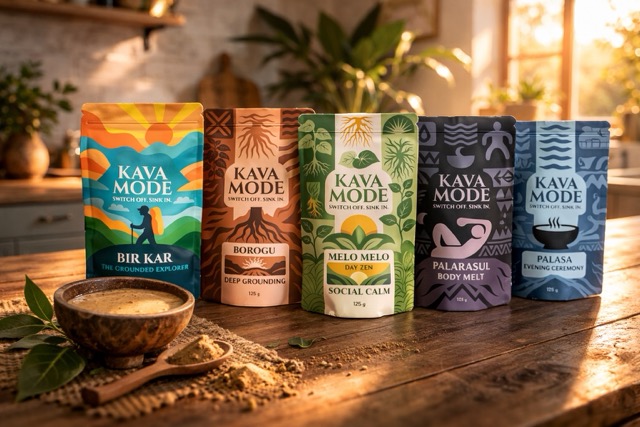
Premium Noble Kava
Discover certified quality and purity with our official partner.
Visit Kava-mode.comBrief & Concise
Kava ceremonies are among the oldest and most significant rituals of the Pacific. They are much more than simply drinking a beverage – they are codified social actions that express hierarchy, respect, and spiritual connection.
Each island group has developed its own traditions, yet the core remains the same: Kava creates a space where people come together, resolve conflicts, make decisions, and communicate with the spiritual world. The way Kava is prepared – often by hand, with respect and concentration – resembles a ritual act.
The actual spiritual dimension begins with drinking: In many cultures, it is believed that Kava clarifies the senses, calms the ego, and opens a state in which people can connect with the spiritual world.
Fiji: The Yaqona Ceremony
In Fiji, the Kava ceremony, known as Yaqona (pronounced "Yang-gona"), is an integral part of the official state culture. The formal variant, the Sevusevu Ceremony, is an official act of welcome and respect.
Procedure of the Sevusevu Ceremony
The guest presents a bundle of dried Kava roots (waka) to the village chief or elder as a gift and sign of respect.
The Kava is mixed with water in a large wooden bowl (Tanoa) and filtered through a cloth (formerly fern leaves).
The chief or honored guest receives the first bowl. All present clap once with hollow hands (Cobo).
The coconut shell (Bilo) is emptied in one go – never in small sips.
After emptying, everyone calls "Maca!" (It is empty) and claps three times. This is repeated for each participant.
Historical Development
Before 1750, Kava in Fiji was associated with ancestor worship in the Būrau (men's houses). Priests prepared Kava every morning as an offering to the village ancestors. The preparation was originally done by grinding, not chewing.
After 1750, Fiji adopted the Tongan ceremonial style with mastication, Tanoa bowls, and Bilo cups. Christian missionaries influenced the shift to Polynesian-influenced ceremonies, which were considered "innocent."
Today, the Yaqona ceremony is mandatory at receptions and welcomes for high-ranking guests. During state visits, weddings, and important community decisions, Yaqona is not only served – it is celebrated.
Tonga: The 'Ava Ceremony
In Tonga, drinking 'Ava or 'Ava-Tau is seen as access to the spiritual order. The ceremony is highly formalized with fixed seating arrangements, defined roles, and strict etiquette.
Defined Roles
The person who mixes the Kava – traditionally a young woman of high rank.
The speaker/ceremony master who announces the order.
Appointed individuals with high symbolic responsibility.
Official Occasions
● Coronation ceremonies of the king
● Government transitions and inaugurations
● Reception of high-ranking state guests
● Important community decisions
● Funerals of dignitaries
The enjoyment is strictly codified: Who drinks when, what words are spoken, how the bowl is passed – all follows a ritual choreography. The message behind it: Only those who submit to the cultural framework will be heard.
The Tanoa: Sacred Vessel
The Tanoa (or Tano'a) is a round wooden bowl with four or more legs, often intricately carved. It is not just a vessel but a sacred object that symbolizes the connection between the living and the ancestors. In some families, Tanoas are passed down through generations.
Samoa: The 'Ava Ceremony
The Samoan 'Ava ceremony is known for its strict adherence to the social hierarchy. The order in which drinking occurs precisely reflects the rank and status of each participant.
Traditional Preparation
Historically, Kava was prepared by a Taupou (a young woman of high rank, often the daughter of a chief). She would ritually cleanse herself by washing her hands and wrists, sit cross-legged with her upper body exposed behind the Kava bowl, her hair adorned with flowers.
The Kava was filtered through the inner bark of the Fau tree (Hibiscus tiliaceus). This practice disappeared after European contact, but the strict hierarchy of the ceremony remained.
Important: The Order
A mistake in the drinking order is considered a serious insult. The ceremony master must know the exact hierarchy of all present – from chiefs to speakers to guests. This order is announced aloud before each bowl is served.
To this day, the 'Ava ceremony is conducted at political gatherings, the introduction of new chiefs, and important community decisions. It is a living example of how Kava makes social order visible.
Vanuatu: The Nakamal Ritual
In Vanuatu, the homeland of Kava, daily Kava drinking is less formalized than in Polynesia, but no less significant. The center of Kava life is the Nakamal – the traditional meeting place.
The Ritual on Tanna
On the island of Tanna, Kava is prepared daily at sunset and consumed together. Traditionally, this was an exclusively male activity – young circumcised men chewed the root for the elders.
The root is cut into pieces, scraped, and grated with coconut fibers. The first filtrate is called "the body" and contains most of the Kavalactones. The second infusion (Nipar/Makas) has weaker effects.
There is a belief: "Too much noise or too much light can kill the Kava." After drinking, the men sit by small fires to "listen to the song of the Kava" (harem singsing blong kava).
Tamafa: The Ancestor Prayer
On Tanna, some communities practice Tamafa – a ritual spitting as a prayer to the ancestors. Before drinking the Kava, a small part is spat on the ground to honor the spirits of the ancestors and ask for their blessing.
In contrast to the highly formalized Polynesian ceremonies, Kava drinking in Vanuatu is often more informal – a time for serious conversations, stories, myths, and politics. As an ethnographer noted: "Under the influence of Kava, one feels a sensation of immense peace and has such a wide range of thoughts that it seems to provide answers even to the most unsolvable problems."
Hawaii: The 'Awa Tradition
In Hawaii, Kava is known as 'Awa and was traditionally closely linked to ancestor worship and religious practices. The Hawaiian 'Awa culture differs in some aspects from other Pacific traditions.
Features
● Use of bulrush fibers (Mariscus javanicus) as a strainer
● Close connection to the goddess Hina and the god Kanaloa
● Used in healing rituals by Kahuna (priests)
● Special varieties like 'Awa Hiwa for ceremonial purposes
Cultural Renaissance
'Awa is experiencing a cultural revival in Hawaii after a decline during the colonial period. Hawaiian cultural groups are preserving traditional ceremonies and increasingly cultivating local 'Awa varieties.
The Hawaiian 'Awa ceremony was less formalized than the Tongan or Samoan, but no less spiritually significant. 'Awa was sacrificed to the gods, used in healing rituals, and consumed during important life transitions.
The Spiritual Dimension
In the cultures of Oceania, Kava is much more than a means of relaxation – it is a spiritual medium. Its use in ritual contexts dates back to pre-linguistic times.
Spiritual Functions of Kava
Connection with the spirits of ancestors and nature spirits.
Clarification of the mind before important decisions.
Cleansing and asking for forgiveness in disputes.
Inauguration of new chiefs or priests.
Promotion of prophetic dreams and insights.
Support for physical and emotional suffering.
In some regions of Vanuatu, Kava is even regarded as a being – with its own character, voice, and will. Ethnographic reports describe how Kava is used to induce trance states – not hallucinogenic, but consciousness-expanding.
Western Kava users may experience this spiritual level more subtly – perhaps in the form of heightened intuition, inner peace, or clarity in meditation. Yet here too, it holds true: The effect of Kava is not only chemical – it is culturally framed. Those who understand Kava as a ritual rather than a beverage will feel more.
Ceremonial Protocol
Although the ceremonies differ from island to island, there are common elements that form the universal protocol of Kava culture.
| Element | Meaning | Regional Variants |
|---|---|---|
| Seating Arrangement | Reflects social hierarchy | Strict in Tonga/Samoa, looser in Vanuatu |
| First Bowl | Honor for the highest rank | Chief, honored guest, or elder |
| Clapping | Acknowledgment and respect | Cobo (Fiji), various patterns |
| Drinking | Complete acceptance of the offer | Always in one go, never in sips |
| Silence | Respect for the effect | Especially emphasized in Vanuatu |
| Toast | Community affirmation | "Maca!" (Fiji), "Bula!" (modern) |
Tips for Visitors
If you have the opportunity to participate in a traditional Kava ceremony, please observe the following basic rules:
● Wait until a bowl is offered to you – never take one yourself.
● Drink in one go – small sips are considered impolite.
● Clap after drinking (ask about the local custom).
● Speak quietly and respect the meditative atmosphere.
● Bring a gift when visiting a village (Kava roots are ideal).
Continue in the Culture Chapter
Related Topics
Based on studies by

With contributions from
This wiki is a curated resource that synthesizes research from peer-reviewed studies and expert researchers. It is not written by the researchers listed above, but rather based on their published work.
Scientific Sources
The information on this page is based on the following scientific studies and publications:
Kava: The Pacific Elixir - The Definitive Guide to Its Ethnobotany, History, and Chemistry
Vincent Lebot, Mark Merlin, Lamont Lindstrom (1997) – Yale University Press
View studyTable of Contents
Premium Noble Kava
Discover certified quality and purity with our official partner.
Visit Kava-mode.com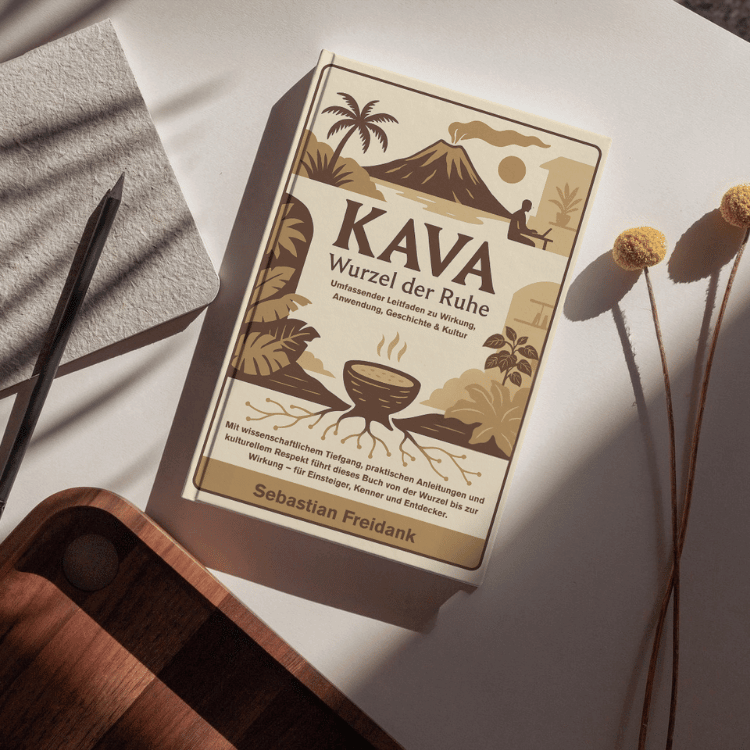
Kava – Root of Calm
The comprehensive guide to effects, history & culture.