Ingredients & Chemistry
The pharmacological secrets of Piper methysticum: Kavalactones, chemotypes, and mechanisms of action.
Contents
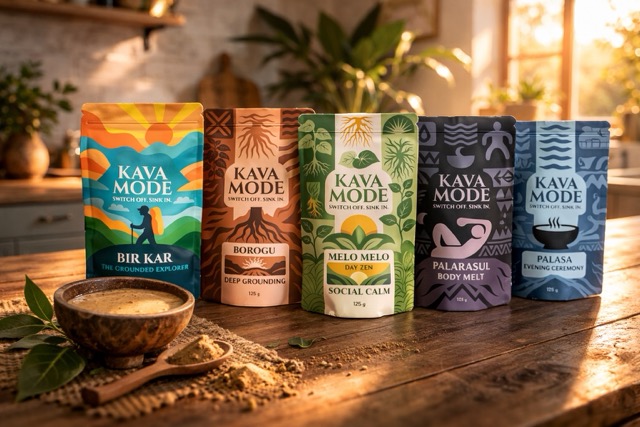
Premium Noble Kava
Discover certified quality and purity with our official partner.
Visit Kava-mode.comBrief & Concise
The psychoactive effect of Kava is primarily produced by a group of compounds known as Kavalactones (or Kava Pyrones). Unlike many other psychoactive plants (such as coffee or tea), Kava does not contain alkaloids as its main active ingredients.
So far, 18 different kavalactones have been identified. Six major kavalactones make up most of the kavalactone fraction normally measured in analysis and jointly shape the effect profile. Their ranking forms the basis of the chemotype system.
The 6 Main Kavalactones
The six major kavalactones jointly shape kava's effect profile. Individual compounds are associated with different emphases, while the experienced overall effect also depends on the whole plant profile, preparation, dose and individual response.
| # | Name | Abbreviation | Primary Effect |
|---|---|---|---|
| 1 | Desmethoxyyangonin | DMY | Focus, motivation and social openness. Monoaminergic and MAO-related mechanisms are under investigation; a CB2 effect was described preclinically in 2026 in the context of bone metabolism. |
| 2 | Dihydrokavain | DHK | Pronounced physical and muscular relaxation; sodium and calcium channels are being investigated experimentally as possible mechanisms. |
| 3 | Yangonin | Y | Mood-lifting and mildly euphoric component; shows in-vitro affinity for the CB1 receptor but should not be equated with THC. |
| 4 | Kavain | K | Clear, anxiety-relieving relaxation, a calmer mood and mental focus. Modulation of several GABA-A receptor subtypes has been observed experimentally. |
| 5 | Dihydromethysticin | DHM | Deep physical calm, sedation and an often longer-perceived profile. An early position can indicate a heavy character but does not by itself prove Tudei kava. |
| 6 | Methysticin | M | Physical calm, a heavier evening profile and sleep-supporting properties; additional mechanisms have mainly been studied preclinically. |
The Chemotype System
The six-digit chemotype ranks the six major kavalactones by relative abundance. It shows an order, not exact percentages, and provides context for a profile rather than a reliable prediction of effects.
Example: Chemotype 426531
This means that Kavain (4) has the highest concentration, followed by Dihydrokavain (2), then Methysticin (6), and so on.
Noble Kava vs. Tudei Kava
The ranking can provide clues about the chemical profile. Classification as Noble or Tudei also requires cultivar identity, plant parts, origin, processing and analytical quality data.
- Noble Kava: Many documented Noble profiles begin with 4 (Kavain) or 2 (Dihydrokavain). This observation is a clue, not a stand-alone proof of quality or safety.
Typical codes: 423165, 426531, 246531 - Tudei Kava: An early 5 (Dihydromethysticin) position can fit a heavier, longer-lasting profile. Classification and tolerability must not be inferred from that digit alone.
Typical codes: 253461, 526431
How the Kavalactones Work Together
Traditional kava contains several kavalactones and other plant constituents. Their interaction shapes the typical range of clear mental calm, mood lift and physical relaxation, although a fixed human 'entourage effect' has not been conclusively established.
Kavain is especially associated with clear, anxiety-relieving relaxation, while Yangonin and Desmethoxyyangonin are more often discussed in relation to mood and focus. Traditional water preparations can therefore produce a different overall profile from isolated compounds, even though each compound's contribution cannot be quantified precisely in clinical terms.
Other Ingredients
In addition to the Kavalactones, the root contains:
- Flavokavins (A, B, C): Pawa et al. (2026) found selective MAO-A inhibition by flavokawain A in in-vitro enzyme assays (IC50 0.077 µM); an artificial-membrane assay supported possible blood-brain-barrier passage, alongside in-silico modelling. The study tested neither humans nor antidepressant treatment with kava.
- Alkaloids: Dragull et al. (2003): leaves about 0.2%; roots/rhizomes <45 ppm (LOQ) in the cited analysis. Nerurkar et al. (2004): HepG2 cytotoxicity in vitro; this does not by itself prove human hepatotoxicity.
- Starch & Fiber: Make up about 43% of the dry mass and provide the typical consistency of the drink.
- Minerals: Potassium, calcium, magnesium.
In-Depth Articles
For more detailed information on each topic, visit our specialized subpages:
Based on studies by

CIRAD, French Agricultural Research Centre for International Development
View profile →With contributions from
This wiki is a curated resource that synthesizes research from peer-reviewed studies and expert researchers. It is not written by the researchers listed above, but rather based on their published work.
Scientific Sources
The information on this page is based on the following scientific studies and publications:
Measuring the Chemical and Cytotoxic Variability of Commercially Available Kava (Piper methysticum G. Forster)
Unknown (Unknown) – Unknown
View studyIn Vitro Toxicity of Kava Alkaloid, Pipermethystine, in HepG2 Cells Compared to Kavalactones
Nerurkar P.V., Dragull K., Tang C.S. (2004) – Toxicological Sciences
View studyKava: The Pacific Elixir - The Definitive Guide to Its Ethnobotany, History, and Chemistry
Vincent Lebot, Mark Merlin, Lamont Lindstrom (1997) – Yale University Press
View studyContents
Premium Noble Kava
Discover certified quality and purity with our official partner.
Visit Kava-mode.com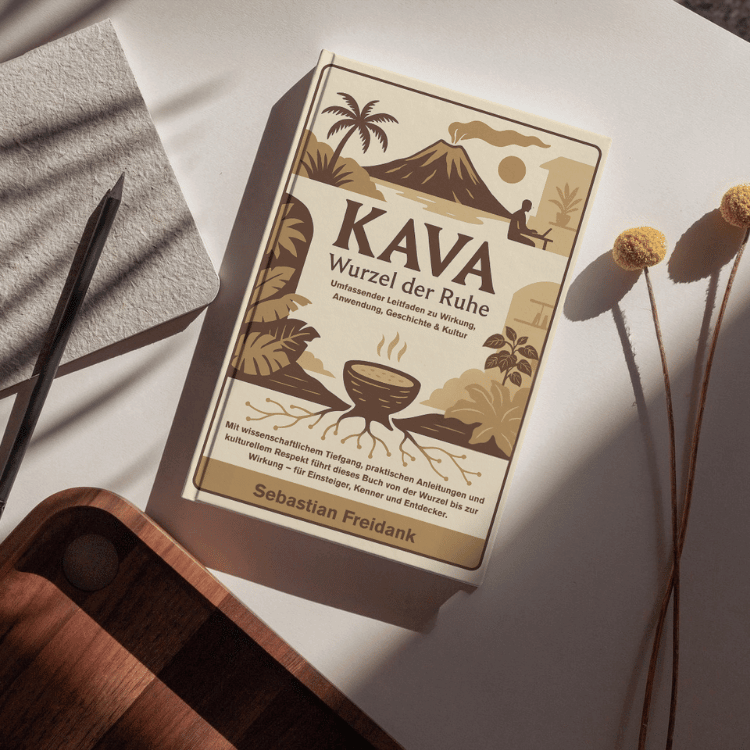
Kava – Root of Calm
The comprehensive guide to effects, history & culture.