
Contents
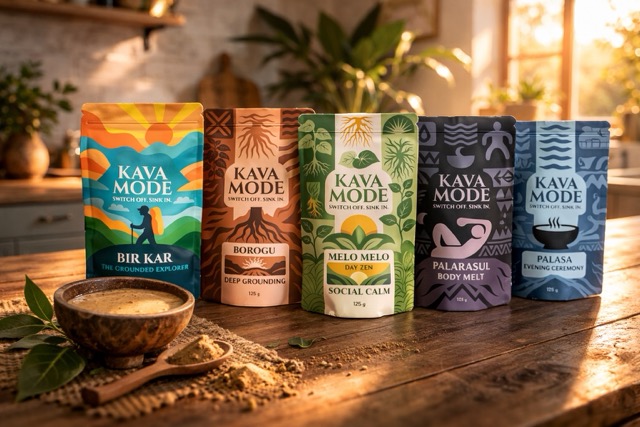
Premium Noble Kava
Discover certified quality and purity with our official partner.
Visit Kava-mode.comBrief & Concise
The muscle-relaxing effect of Kava is one of the most noticeable effects. After the first shell, a wave of relaxation begins to move through the body – tensions dissolve, and the body feels "heavy" and pleasant.
In traditional use in the Pacific, Kava has been used for thousands of years to relieve muscle pain and physical tension. Modern research has clarified the underlying mechanisms.
Mechanisms of Action
Many consumers describe physical and muscular relaxation. Preclinical work on sodium and calcium channels provides plausible mechanisms. Strength varies with product, dose and person, and larger amounts can cause drowsiness or impaired coordination.
Sodium and Calcium Channel Blockade
Many consumers describe physical and muscular relaxation. Preclinical work on sodium and calcium channels provides plausible mechanisms. Strength varies with product, dose and person, and larger amounts can cause drowsiness or impaired coordination.
Central GABA Modulation
Many consumers describe physical and muscular relaxation. Preclinical work on sodium and calcium channels provides plausible mechanisms. Strength varies with product, dose and person, and larger amounts can cause drowsiness or impaired coordination.
Peripheral Effect
Many consumers describe physical and muscular relaxation. Preclinical work on sodium and calcium channels provides plausible mechanisms. Strength varies with product, dose and person, and larger amounts can cause drowsiness or impaired coordination.
"Many consumers describe physical and muscular relaxation. Preclinical work on sodium and calcium channels provides plausible mechanisms. Strength varies with product, dose and person, and larger amounts can cause drowsiness or impaired coordination."
Relevant Kavalactones
Kavalactones contribute differently to physical relaxation. DHK and DHM in particular are associated in research and experience with a more body-focused profile:
Dihydrokavain (DHK)
Position 2 in the chemotypeMany consumers describe physical and muscular relaxation. Preclinical work on sodium and calcium channels provides plausible mechanisms. Strength varies with product, dose and person, and larger amounts can cause drowsiness or impaired coordination.
Effect Profile: Many consumers describe physical and muscular relaxation. Preclinical work on sodium and calcium channels provides plausible mechanisms. Strength varies with product, dose and person, and larger amounts can cause drowsiness or impaired coordination.
Dihydromethysticin (DHM)
Position 5 in the chemotypeSedation describes kava's **calming and sleep-supporting side**, which can become more prominent with body-centered Heavy profiles and higher doses. DHM, DHK, and Methysticin are often associated with this overall impression. Many people experience low to moderate amounts as mentally clear and relaxed. The degree of drowsiness depends on cultivar, batch, preparation, dose, and individual response.
Caution: An early DHM position can point to a heavy or Tudei-like profile. Cultivar identity, plant parts, origin and analytical data are also needed for classification.
| Kavalactone | Muscle Relaxation | Sedation | Duration |
|---|
Areas of Application
The muscle-relaxing effect of Kava can be helpful for various complaints:
Tension in the Neck/Shoulder Area
Stress and screen work often lead to chronic tension. Kava can help relieve these and improve well-being.
Back Pain
For muscle-related back pain, the relaxing effect can provide relief. Kava does not replace medical treatment but can be supportive.
Tension Headaches
Headaches caused by muscle tension in the neck and head area can be alleviated through relaxation.
Menstrual Discomfort
The spasm-relieving effect can be helpful for menstrual cramps. Traditionally, Kava has also been used for this purpose in the Pacific.
After Exercise
For recovery after intense training, Kava can help relax the muscles and promote recovery.
Restless Legs Syndrome
Some users report relief from restless legs. The combination of muscle relaxation and anxiolysis can be effective here.
Recommended Chemotypes & Varieties
For maximum muscle relaxation, varieties with a high DHK content (Position 2 in the first or second place) should be chosen. These "Heavy" Kavas are body-focused and ideal for evening use.
Palasa
Chemotyp: Literature reference: 246531 · Other reported variants: 423165 / 421635
Deeply body-centered, calming, muscle-relaxing and sleep-promoting, with a strong evening profile.
Ambae (Vanuatu)
Chemotyp: 246531
Dihydrokavain > Kavain > Methysticin > Dihydromethysticin > Yangonin > Desmethoxyyangonin
Palarasul
Chemotyp: Literature reference: 246531 · Other reported variants: 423156 / 423165
A pronounced body-melt profile: deeply physical, strongly muscle-relaxing and long-lasting.
Borogu (Vanuatu)
Chemotyp: Literature reference: 423561 · Published analyses: 423516 / 423651
Calm, social and distinctly body-relaxing; preparation, amount and individual response can shift the experience further toward the heavy side.
Chemotype Tip
Heavy is an experience-based term for body-centered, calming or sedating kava profiles. It cannot be assigned solely because DHK or DHM leads a chemotype; the complete profile, product, dose, preparation and person all matter. Such profiles are often chosen for the evening, but they are not a proven treatment for sleep disorders.
Practical Application
For application in muscle tension, there are some recommendations:
Recommendations for Muscle Relaxation
- Timing: Best in the evening, 1-2 hours before bedtime. The sedative component of muscle-relaxing varieties can make you sleepy.
- Dosage: 2-3 shells (15-25g powder) for noticeable physical effect. Beginners should start with less.
- Combination: Heat (warm bath, hot water bottle) enhances the relaxing effect. Light stretching exercises can also be helpful.
- Regularity: For chronic tension, regular evening use (with breaks) can be beneficial.
- Hydration: Drink water as needed if you notice thirst or dry mouth; a clinically relevant diuretic effect of kava has not been established.
The "Kava Feeling"
The physical relaxation from Kava is often described as a pleasant "heaviness." The limbs feel warm and relaxed, and tensions dissolve on their own. This state should not be confused with drowsiness – the mind remains clear, only the body relaxes deeply.
Continue in the chapter Effects:
Mood & Social
How Kava enhances mood and promotes social interactions
Based on studies by

With contributions from
This wiki is a curated resource that synthesizes research from peer-reviewed studies and expert researchers. It is not written by the researchers listed above, but rather based on their published work.
Scientific Sources
The information on this page is based on the following scientific studies and publications:
Kava extract for treating anxiety (Cochrane Review)
Pittler M.H., Ernst E. (2003) – Cochrane Database of Systematic Reviews
View studyKava in the treatment of generalized anxiety disorder: a double-blind, randomized, placebo-controlled study
Sarris J., Stough C., Bousman C.A., Wahid Z.T., Murray G., Teschke R., Savage K.M., Stough C., Byrne G.J., Scholey A. (2013) – Journal of Affective Disorders
View studyContents
Premium Noble Kava
Discover certified quality and purity with our official partner.
Visit Kava-mode.com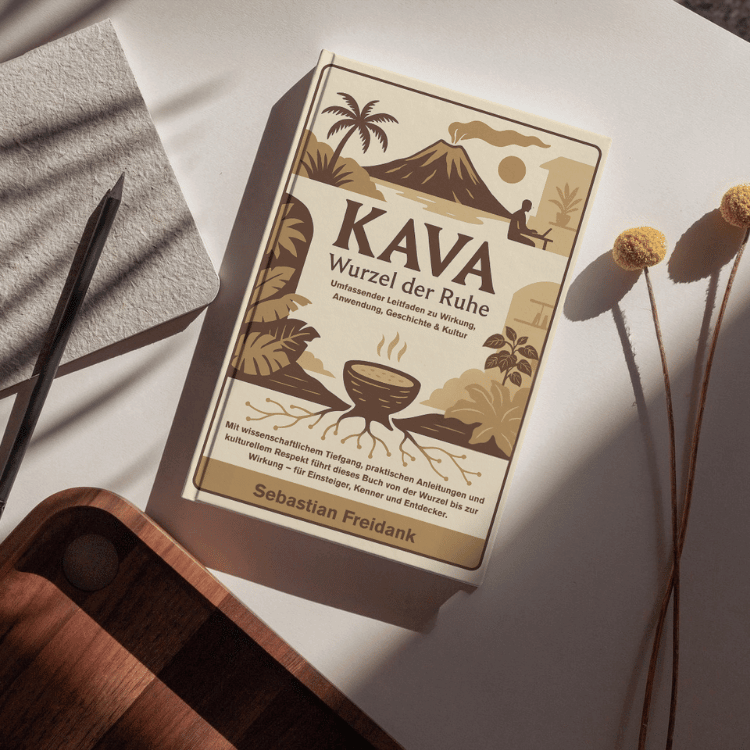
Kava – Root of Calm
The comprehensive guide to effects, history & culture.