
Contents
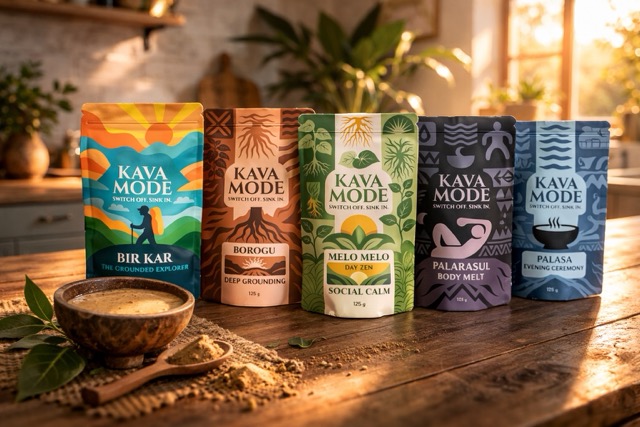
Premium Noble Kava
Discover certified quality and purity with our official partner.
Visit Kava-mode.comBrief & Concise
Many consumers describe low to moderate amounts as calming while retaining mental clarity; body-heavy profiles, higher amounts or individual sensitivity can nevertheless cause drowsiness and impair attention or reaction time. In Lehrl (2004), no cognitive impairment was observed for the tested LI 150 extract and study period; this is not a guarantee for every product, dose or person.
Some consumers use the term Reverse Tolerance for the observation that they notice little at first, but perceive Kava more clearly with later use or report a similar effect from a smaller amount. This is an observation and hypothesis, not a guaranteed process.
Mental Clarity
Many consumers describe low to moderate amounts as calming while retaining mental clarity; body-heavy profiles, higher amounts or individual sensitivity can nevertheless cause drowsiness and impair attention or reaction time. In Lehrl (2004), no cognitive impairment was observed for the tested LI 150 extract and study period; this is not a guarantee for every product, dose or person.
Characteristics of Kava Clarity
Many consumers describe low to moderate amounts as calming while retaining mental clarity; body-heavy profiles, higher amounts or individual sensitivity can nevertheless cause drowsiness and impair attention or reaction time. In Lehrl (2004), no cognitive impairment was observed for the tested LI 150 extract and study period; this is not a guarantee for every product, dose or person.
"Many consumers describe low to moderate amounts as calming while retaining mental clarity; body-heavy profiles, higher amounts or individual sensitivity can nevertheless cause drowsiness and impair attention or reaction time. In Lehrl (2004), no cognitive impairment was observed for the tested LI 150 extract and study period; this is not a guarantee for every product, dose or person."
Focus & Concentration
Many Kava users report improved concentration, especially with creative or complex tasks. This may seem paradoxical – how can a relaxant improve focus?
Reduction of Distractions
Anxiety and worries are common causes of concentration problems. The anxiolytic effect reduces these "mental noise", allowing for deeper focus.
Noradrenaline Modulation
Inhibition of noradrenaline reuptake contributes to a state of alert attention. One is relaxed but not tired – an ideal state for focused work.
Flow State
The combination of relaxation and clarity can facilitate entry into a flow state – that state of complete immersion in an activity where time seems to fly.
Dosage Note
The cognitive benefits are best observed at low to moderate doses. At higher doses, the sedative component may predominate, especially with heavy strains. For focus and concentration, heady strains at low doses are ideal.
Reverse Tolerance
Reverse Tolerance is a term used in consumer reports. Some people initially notice little and perceive the effect more clearly with later use, or report a similar effect from a smaller amount. Whether and when this occurs varies, and the mechanism has not been established.
The Phenomenon Explained
Some consumers notice little or nothing at first. This can have several causes and is not by itself a judgment about product quality.
With later use, some people describe the effect as easier to recognize. There is no fixed number of uses and no guaranteed breakthrough.
Some experienced consumers report a similar perceived effect from less Kava. This observation is individual and cannot be predicted.
Possible Explanations
- Learning effect: Experience can make subtle effects easier to recognize and expectations easier to calibrate.
- Preparation routine: More consistent kneading, filtering, water volume and powder amount can change extraction and comparability.
- Perception and context: Attention, setting, meal timing and expectations can influence how clearly an effect is noticed.
- Individual variation: Occurrence and timing differ from person to person; a specific biological mechanism has not been established.
Practical Significance
- Observe the effect calmly instead of expecting a guaranteed breakthrough.
- Keep preparation and amount as consistent as possible when comparing sessions.
- Do not automatically increase the amount just because the first experience is subtle.
- Reverse Tolerance does not establish that Kava is free from dependence risk; dependence and safety must be assessed separately.
"Those who regularly drink Kava develop a sense over time of which chemotype combination works best – comparable to grape varieties in wine or roast profiles in coffee."
Neurobiological Foundations
The cognitive effects of Kava are based on a complex interplay of various neurotransmitter systems.
| System | Effect | Cognitive Effect |
|---|---|---|
| GABA | Enhancement of inhibition | Reduction of anxiety and "mental noise" |
| Noradrenaline | Reuptake inhibition | Alert attention, focus |
| Dopamine | MAO-B inhibition | Motivation, sense of reward |
| Glutamate | Modulation | Balance between excitation and inhibition |
What is special about Kava is the balance of these effects. While GABA enhancement calms, noradrenaline modulation promotes alertness. The result is a state that is neither overstimulated nor sedated – ideal for cognitive tasks.
Recommended Chemotypes
For cognitive benefits, heady strains with a high kavain content are ideal. These primarily act mentally and avoid excessive sedation.
Kelai
Chemotyp: Literature reference: 423516 · Published analyses: 423156
Mentally light, clear, focused, communicative and socially open: a classic heady profile.
Bir Kar
Chemotyp: Literature reference: 246513 · Additional shop/trade reports: 423156 / 423561
Clear, social, communicative and distinctly head-forward, fitting daytime use, creativity, music and social situations.
Practical Application
For practical use, keep the preparation comparable and observe individual effects without expecting a fixed Reverse Tolerance timeline.
For Concentrated Work
- Strain: Heady (Kelai, Bir Kar)
- Dosage: 1 Shell (15g) – keep low
- Timing: 30-60 min before work
- Note: Do not redose during work
For beginners: observe the effect
- Frequency: No fixed schedule; allow breaks and consider personal tolerance.
- Dosage: Start low and document preparation and amount.
- Patience: Occurrence and timing vary; there is no guaranteed breakthrough.
- Afterwards: Adjust carefully only when needed.
Long-term observation
Some consumers report that they perceive Kava more clearly over time or obtain a similar perceived effect from a smaller amount. Whether and when this occurs varies. It does not by itself prove sustainability, cost savings or absence of dependence; these questions must be assessed separately.
Back to Overview:
Effects & Impacts
Overview of all effects of Kava
Based on studies by

With contributions from
This wiki is a curated resource that synthesizes research from peer-reviewed studies and expert researchers. It is not written by the researchers listed above, but rather based on their published work.
Scientific Sources
The information on this page is based on the following scientific studies and publications:
Acute effects of kava, alone or in combination with alcohol, on subjective measures of impairment and intoxication and on cognitive performance
Foo H., LEMON J. (1997) – Drug and Alcohol Review
View studyKava-Kava Extract LI 150 Is as Effective as Opipramol and Buspirone in Generalised Anxiety Disorder
Lehrl S. (2004) – Phytomedicine
View studyKava-kava in the treatment of anxiety
Wheatley D. (2001) – Human Psychopharmacology: Clinical and Experimental
View studyContents
Premium Noble Kava
Discover certified quality and purity with our official partner.
Visit Kava-mode.com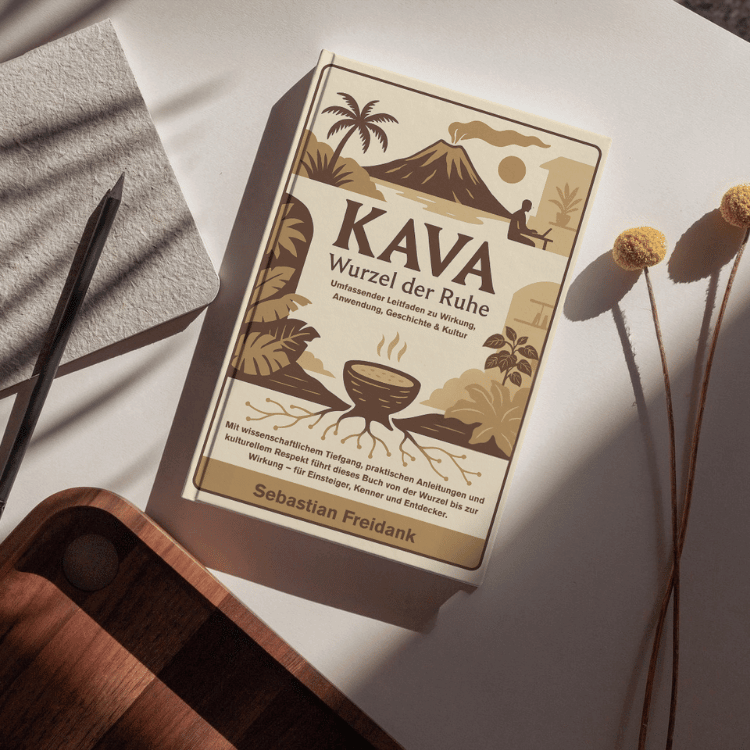
Kava – Root of Calm
The comprehensive guide to effects, history & culture.