
Contents
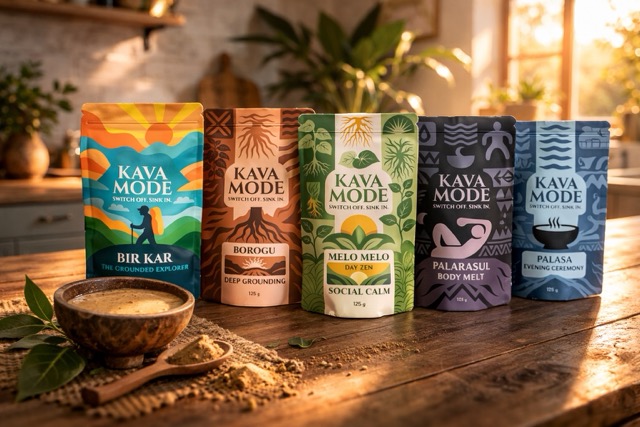
Premium Noble Kava
Discover certified quality and purity with our official partner.
Visit Kava-mode.comBrief & Concise
After comprehensive analyses by WHO, EMA, and independent researchers, the following is concluded:
- ●Traditionally prepared kava beverage is assessed as low risk, but not risk-free, when consumed moderately
- ●Rare severe liver injuries have been documented; the case reports do not support a reliable incidence estimate
- ●Most case reports exhibited significant quality deficiencies in causality assessment
- ●The EU ban of 2002 was deemed disproportionate by German courts
The Ban of 2002
In 2002, Kava was removed from the market in Germany and many other European countries. The Federal Institute for Drugs and Medical Devices (BfArM) revoked the approvals for Kava-containing medicines after reports of severe liver damage were received. This decision had far-reaching consequences for the global Kava market and the Pacific producing countries.
Chronology of Events
For detailed information on the current legal status in various countries, see Legal Status & Legality.
What Really Happened: A Critical Analysis
The original case reports that led to the ban were intensively studied in the following years. Significant methodological deficiencies were revealed:
Problems with the Case Reports
- •Incomplete documentation in over 50% of cases
- •No standardized causality assessment (RUCAM)
- •Comedication with hepatotoxic substances ignored
- •Alcohol consumption often undocumented
- •Product quality and plant parts unclear
Later Findings
- •Many products contained above-ground plant parts
- •The case reports involved different extract types, including aqueous preparations
- •Tudei Kava was sometimes sold as Noble
- •Mold contamination detected in some products
- •Genetic polymorphisms identified as a risk factor
Rehabilitation by the Courts
The Cologne Administrative Court and the Higher Administrative Court of Münster found defects in the earlier revocation of medicinal-product authorizations. Those decisions concerned the earlier administrative action; in 2019 BfArM revoked the affected authorizations again.
The Scientific Evidence
After the ban, several comprehensive scientific evaluations were conducted, painting a more nuanced picture of Kava safety.
WHO Assessment 2007
The World Health Organization (WHO) conducted a comprehensive analysis of all available case reports in 2007. The results were revealing:
WHO Analysis of 93 Case Reports
Of 93 reports, WHO classified 8 as probably causal, 53 as possible, 28 as unassessable and 4 as excluded. Five reports involved aqueous preparations, including two traditionally prepared beverages; the WHO case series therefore does not establish any preparation as risk-free.
EMA Assessment 2017
EMA’s 2017 assessment report reviewed kava medicinal products and concluded that the benefit-risk balance for oral use was unfavourable; no EU herbal monograph was established.
- Clinical Studies: Short-term trials showed anxiolytic signals but could not address rare liver injury
- Side Effects: Spontaneous reports included severe liver injury; frequency and individual prediction remain uncertain
- Risk Factors: EMA assessed the benefit-risk balance of oral kava medicines as unfavourable
Evidence from Clinical Studies
A particularly important point: In controlled clinical studies with standardized Kava preparations, no severe liver damage was observed. A systematic review by Smith & Leiras (2018) analyzed 11 randomized studies and found no evidence of hepatotoxicity.
Summary of Study Findings
| Study | Participants | Duration | Liver Damage |
|---|---|---|---|
| Sarris et al. (2013) | 75 | 6 weeks | None |
| Boerner et al. (2003) | 129 | 8 weeks | None* |
| Lehrl (2004) | 40 | 4 weeks | None |
| Cochrane Review (2003) | 645 (7 studies) | 1-24 weeks | None |
*Mild transaminase elevations in 2 subjects, one had already elevated baseline values
Identified Risk Factors
Scientific research has identified several factors that may increase the risk of hepatic side effects. Understanding these factors allows for safe use.
Extract Types: Aqueous vs. Organic
A central finding of the WHO analysis was the difference between various extraction methods:
Aqueous Extracts (traditional)
- • Traditional preparation method
- • Primarily extracts Kavalactones
- • Contains protective glutathione
- • Rare suspected cases were also reported with aqueous preparations
- • FAO/WHO: moderate consumption of the traditional beverage is considered low risk, not risk-free
Organic Extracts (acetonic/ethanolic)
- • Industrial extraction method
- • Higher Kavalactone concentration
- • Also extracts flavokavins
- • Glutathione is not extracted
- • Concentrated extracts and traditional beverages require separate assessment; neither is categorically risk-free
Plant Parts: Root vs. Above-Ground Parts
The use of different plant parts has significant implications for safety:
Pipermethystin Content by Plant Part
| Plant Part | Pipermethystin | Safety |
|---|---|---|
| Root/Rhizome | Below the quantification limit (<45 ppm) in the cited analysis | Not a stand-alone proof of safety |
| Stem Sheaths | Up to 0.85% | Not intended for beverages |
| Leaves | Approx. 0.2% | Not intended for beverages |
Nerurkar et al. found pipermethystine below the 45 ppm quantification limit in the tested root/rhizome sample and at about 0.2% in leaves. The reported cytotoxicity comes from HepG2 cell experiments; it neither proves causation of human liver injury nor provides a blanket safety classification of plant parts.
Genetic factors and idiosyncratic reactions
Multiple hepatic enzymes and metabolic pathways are involved in kavalactone metabolism; the available evidence does not support reducing this process to a single enzyme.
- Multiple metabolic pathways: The contribution of individual hepatic enzymes may vary with the compound, dose and individual characteristics.
- Possible individual susceptibility: Genetic polymorphisms are only a possible, unconfirmed explanation for some idiosyncratic cases; no reliable quantitative risk attribution can be made.
Comedication & Alcohol
The WHO identified the following comedications as particularly problematic:
- • Alcohol (synergistic hepatotoxicity)
- • Paracetamol/Acetaminophen (hepatotoxic)
- • Benzodiazepines (CYP interaction)
- • Antipsychotics (CYP interaction)
- • Statins (hepatotoxic potential)
Possible Mechanisms of Hepatotoxicity
The exact mechanisms by which Kava can cause liver damage in rare cases are not yet fully understood. Several hypotheses are being discussed:
1. Quinone Metabolites
Kavain and Dihydrokavain can be oxidized to reactive quinone metabolites that can react with cellular proteins and cause oxidative stress (Johnson et al., 2003). Glutathione can neutralize these metabolites – a possible reason why aqueous extracts (which contain glutathione) are safer.
2. Flavokavins
Flavokavin B shows in vitro cytotoxicity and can induce apoptosis in hepatocytes. Organic extracts contain higher concentrations of flavokavins than aqueous preparations.
3. Pipermethystin
Pipermethystine was cytotoxic in HepG2 cell experiments. It was below the quantification limit in the tested root/rhizome sample; a causal contribution to human liver injury has not been established.
4. Idiosyncratic Reactions
Some cases may be due to immune-mediated, idiosyncratic reactions that occur independently of dose and are genetically determined.
Practical Recommendations for Safe Consumption
Based on the scientific evidence, clear recommendations for safe Kava consumption can be derived:
Checklist for Safe Kava Consumption
- Use only Noble Kava
Pay attention to the variety designation and buy from trusted sources
- CXS 336R-2020
Regional Codex standard CXS 336R-2020 permits roots, peeled rhizomes and peeled basal stems up to the first node for Noble Kava. Upper stems, leaves, peelings/bark and extraction residues are excluded.
- Prefer traditional aqueous preparation
Kneading or blender method with water
- Do not consume alcohol
No, Kava should not be combined with alcohol. Both substances act on the GABA system and can enhance each other, leading to excessive sedation. Additionally, both are metabolized by the liver, increasing the burden. In traditional Pacific culture, Kava is consumed as an alternative to alcohol, not together with it.
- Be aware of medication interactions
See Interactions
- Avoid in liver diseases
See Contraindications
- Maintain moderate dosing
There is no universal kava dose. A practical guide for traditionally prepared medium-grind root powder is about 10-15 g for beginners and 15-25 g for experienced users; instant products should follow their own instructions. The often-cited 250 mg limit applies to certain standardized extracts, not to every water preparation. Too much, or risky combinations, can cause marked drowsiness, nausea, impaired coordination and other harms.
Continue in the Safety Chapter
Based on studies by

This wiki is a curated resource that synthesizes research from peer-reviewed studies and expert researchers. It is not written by the researchers listed above, but rather based on their published work.
Scientific Sources
The information on this page is based on the following scientific studies and publications:
In Vitro Toxicity of Kava Alkaloid, Pipermethystine, in HepG2 Cells Compared to Kavalactones
Nerurkar P.V., Dragull K., Tang C.S. (2004) – Toxicological Sciences
View studyNekrotisierende Hepatitis nach Einnahme pflanzlicher Heilmittel
Strahl S., Ehret V., Dahm H.H., Maier K.P. (2008) – Deutsche Medizinische Wochenschrift
View studyFatal fulminant hepatic failure induced by a natural therapy containing kava
Gow P.J., Connelly N.J., Crowley P., Angus P.W., Hill R.L. (2003) – Medical Journal of Australia
View studyAcute Liver Failure After Administration of the Herbal Tranquilizer Kava-Kava (Piper methysticum)
Humberston C.L., Akhtar J., Krenzelok E.P. (2003) – Journal of Clinical Psychiatry
View studyContents
Premium Noble Kava
Discover certified quality and purity with our official partner.
Visit Kava-mode.com
Kava – Root of Calm
The comprehensive guide to effects, history & culture.