Table of Contents
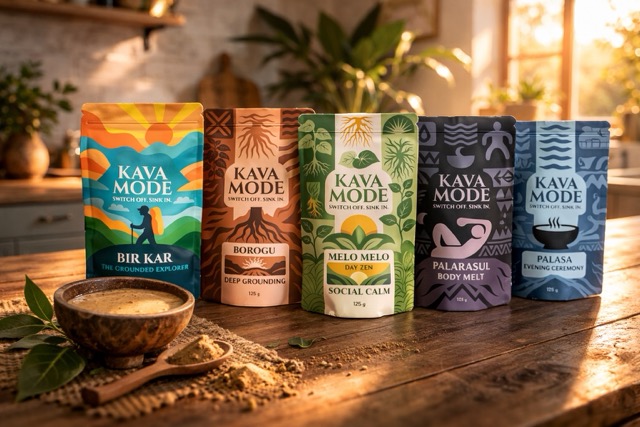
Premium Noble Kava
Discover certified quality and purity with our official partner.
Visit Kava-mode.comBrief & Concise
Vanuatu is regarded as the main domestication centre of cultivated kava because of its great cultivar diversity and genetic and ethnobotanical evidence. The exact course and timing of early domestication cannot, however, be reconstructed completely from archaeology.
Vanuatu – The Cradle of Kava
Genetic and ethnobotanical evidence supports Vanuatu as the main centre of kava domestication. The great cultivar diversity, especially in northern and central Vanuatu, supports this assessment but does not document every historical step.
Vanuatu in Numbers
Vanuatu is not only the genetic center of Kava diversity but also the cultural epicenter. Here you find the oldest and most complex Kava ceremonies, the deepest mythological connections, and the most extensive traditional knowledge about the plant. In some villages, over 50 different varieties are cultivated, each with its own name, character, and purpose.
The Process of Domestication
Cultivated kava, Piper methysticum, arose through human selection from the seed-producing wild form Piper wichmannii. Which traits were selected and when can only partly be reconstructed, so the two forms should not be separated by blanket claims about effects or tolerability.
Millennia of Selection
Over a period of approximately 2,500 to 3,000 years, the inhabitants of Vanuatu systematically selected plants with certain characteristics:
| Selection Criterion | Result |
|---|---|
| More Pleasant Effects | Varieties with relaxing but clear effects were preferred |
| Fewer Side Effects | Plants that did not cause nausea or strong sedation |
| Larger Roots | Higher yield per plant |
| Faster Growth | Shorter time to harvest |
| Better Taste | Less bitter, more drinkable varieties |
Piper methysticum is sterile and propagated vegetatively. Piper methysticum and Piper wichmannii are both decaploid (2n = 130); primary studies support neither a diploid wild form nor a demonstrated origin through repeated hybridization. There are many cultivars: an individual plant is clonally propagated, but not every kava plant worldwide is genetically identical.
"Kava is thus one of the oldest documented examples of deliberately selective agriculture in the South Pacific. The plant is a living cultural treasure – passed down from generation to generation."
Mythological Origins
In addition to the scientific explanation, numerous origin myths exist in Pacific cultures that explain the discovery of Kava. These stories are more than folklore – they encode important knowledge about the plant and its correct use.
The Legend of the Rat
One of the most famous legends from Vanuatu tells of two sisters who observed a wild plant that a rat had nibbled on. The animal behaved unusually peaceful and relaxed afterward – it showed no more fear of humans and moved slowly and deliberately.
Curious, the sisters tried the root themselves and discovered its calming effect. They shared their knowledge with the village, and thus began the history of Kava use. This legend contains an important message: Observation of nature leads to knowledge, and knowledge must be shared.
The Myth of Maerowari
On the island of Tanna in Vanuatu, they tell the story of Maerowari, a young girl who died and from whose grave the first Kava plant grew. Her father, a chief, discovered the plant and its effects. Since then, Kava has been understood as a connection between the living and the ancestors.
This story explains why Kava plays a central role in funerals and ancestor ceremonies in many cultures. The plant is seen as a medium that enables communication with the spirit world.
Cultural Significance of the Origins
Understanding the origins of Kava is not just of historical interest. It explains why the plant has such a special status in Pacific cultures:
Kava as a Gift
In origin myths, Kava is often portrayed as a gift from the gods or ancestors. This explains the respectful treatment of the plant and the strict rules for its preparation and consumption.
Kava as Responsibility
Because cultivated kava does not produce viable seed, its cultivars are maintained and passed on through cuttings. This human stewardship preserves the diversity of kava culture.
Kava as Identity
Vanuatu today strongly defines itself through Kava. The plant is a national symbol and an important economic factor. Protecting Kava culture is part of the national identity.
Kava as Knowledge
Knowledge about Kava varieties, cultivation, and preparation is traditional knowledge passed down orally. It is part of the intangible cultural heritage of Pacific peoples.
Continue in the History chapter:
The Spread Across the Pacific
How Kava conquered the Pacific with the Lapita seafarers
Based on studies by

CIRAD, French Agricultural Research Centre for International Development
View profile →With contributions from
This wiki is a curated resource that synthesizes research from peer-reviewed studies and expert researchers. It is not written by the researchers listed above, but rather based on their published work.
Scientific Sources
The information on this page is based on the following scientific studies and publications:
Kava: The Pacific Elixir - The Definitive Guide to Its Ethnobotany, History, and Chemistry
Vincent Lebot, Mark Merlin, Lamont Lindstrom (1997) – Yale University Press
View studyTable of Contents
Premium Noble Kava
Discover certified quality and purity with our official partner.
Visit Kava-mode.com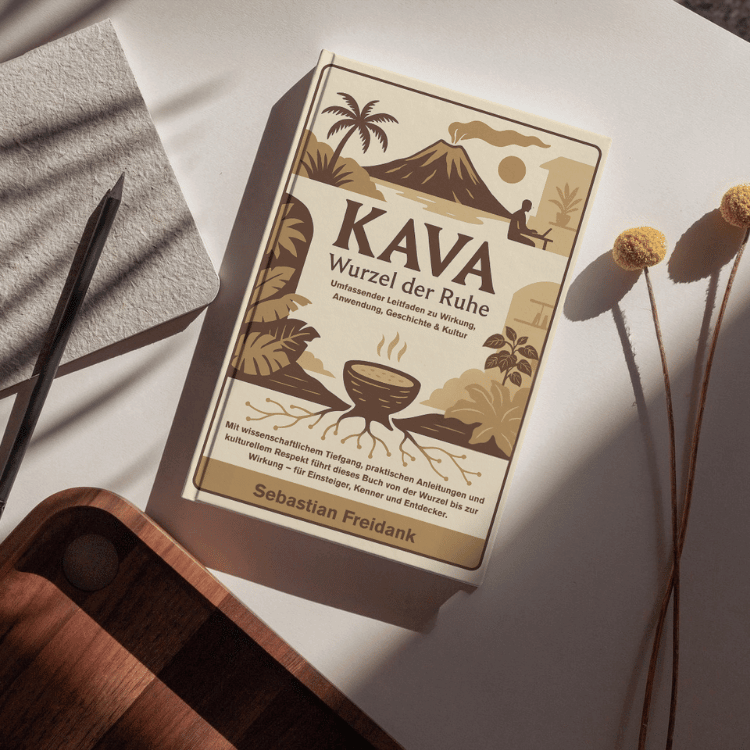
Kava – Root of Calm
The comprehensive guide to effects, history & culture.