Table of Contents
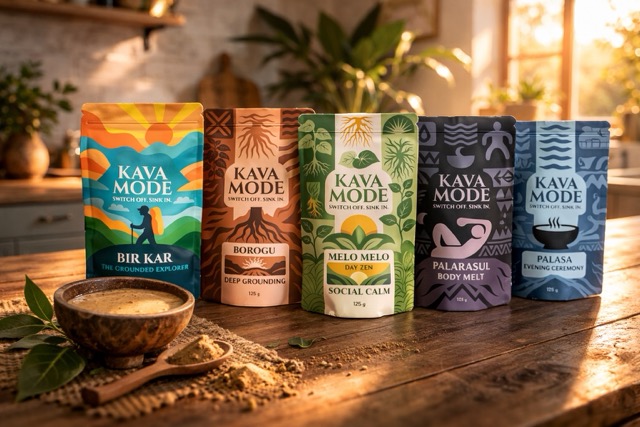
Premium Noble Kava
Discover certified quality and purity with our official partner.
Visit Kava-mode.comBrief & Concise
The morphology of Piper methysticum is the result of millennia of selection. While the above-ground parts of the plant are important for cultivar identification, the true value lies in the underground structures – the complex root system that contains the coveted kavalactones.
Morphological Overview
Kava is a perennial, evergreen shrub with a typical growth height of 1.5 to 3 meters. Under optimal conditions – abundant water, nutrients, and shade – individual plants can reach up to 5 meters.
| Plant Part | Characteristic | Kavalactone Content |
|---|---|---|
| Rootstock (Rhizome) | Thick, woody, branched | Very high (3-20%) |
| Lateral Roots | Fine, fibrous, extensive | Highest content |
| Stem (Trunk) | Knotty, bamboo-like | Low to medium |
| Leaves | Heart-shaped, large | Very low |
| Flowers | Small, spike-shaped | Not used |
The Root System
The economically and pharmacologically most important part of the Kava plant is the underground root system. It consists of two main components that differ in their composition and quality.
The Stump (Corm/Stump)
The stump is the thick, woody part directly below the soil surface. It forms the central mass of the rootstock and can reach considerable dimensions in older plants.
Properties
- Weight: 5-25 kg in mature plants
- Diameter: 10-30 cm
- Texture: Hard, woody, fibrous
- Color: Light brown to dark brown
Kavalactone Profile
- Total content: Medium to high
- More Dihydromethysticin (DHM)
- Less Kavain than lateral roots
- Tends to be "heavier" in effect
The Lateral Roots (Lateral Roots / Waka)
The lateral roots are the finer roots that extend from the stump and spread through the soil. In Fiji, they are called "Waka" and are considered the highest quality component.
Properties
- Diameter: 0.5-3 cm
- Length: Up to several meters
- Texture: Softer, less woody
- Color: Light brown, yellowish
Kavalactone Profile
- Total content: Highest of all plant parts
- Higher Kavain proportion
- More balanced effect profile
- Premium quality ("Waka Grade")
Kavalactone Distribution in the Plant
The concentration of kavalactones varies greatly between different plant parts. This has direct implications for the quality and safety of Kava products.
| Plant Part | Kavalactone Content | Usage | Quality Level |
|---|---|---|---|
| Lateral Roots (Waka) | 10-20% | Premium Kava | Highest |
| Stump (Corm) | 5-15% | Standard Kava | High |
| Basal Stem (Lewena) | 3-8% | Mixed or alone | Medium |
| Upper Stem | 1-3% | Not recommended | Low |
| Leaves | <1% | Not used | Unsuitable |
Stems & Nodes
The stems (trunks) of Kava are one of the most important features for cultivar identification. They grow upright and branch as they age.
Structure
- Nodes: Clearly visible thickenings, similar to bamboo
- Internodes: The sections between nodes, variable in length
- Diameter: 2-5 cm, depending on age and variety
- Height: 1.5-3 m (up to 5 m under optimal conditions)
Variety Features
The color and pattern of the stems is a key feature for distinguishing cultivars:
- Green: Common in many standard varieties
- Spotted: Characteristic of certain varieties
- Striped: Longitudinal stripes in various colors
- Dark purple/Black: Rare, often particularly prized varieties
Leaves
Kava leaves are large, prominent, and serve primarily for photosynthesis. They are traditionally not used for Kava preparation.
Leaf Characteristics
Shape & Size
- Heart-shaped (cordate)
- Width: 15-30 cm
- Length: 20-35 cm
- Alternately arranged
Surface
- Smooth to slightly hairy
- Glossy on the upper side
- Matte on the underside
- Prominent leaf veins
Color
- Light green to dark green
- Purple shades possible
- Petioles often colored
- Variety-specific variations
Flowers & Fruits
Although Piper methysticum produces flowers, the plant is functionally sterile and does not form viable seeds.
Flower Structure
- Type: Spike-shaped inflorescences (Spadix)
- Size: 3-9 cm long
- Color: Greenish-white to yellowish
- Position: Opposite the leaves
- Sex: Usually unisexual (dioecious)
Sterility
The sterility of P. methysticum is a consequence of high polyploidy (decaploidy). This means:
- No viable seeds
- Exclusively vegetative propagation
- Complete dependence on humans
- All plants are genetic clones
This sterility has far-reaching consequences: Without continuous human cultivation, Piper methysticum would become extinct within a generation. Every Kava plant existing today is the result of an unbroken chain of cutting propagation dating back to the first domestications about 3,000 years ago.
Continue in the Botany chapter:
Cultivation & Ecology
Cultivation, propagation & growth conditions
Based on studies by

CIRAD, French Agricultural Research Centre for International Development
View profile →This wiki is a curated resource that synthesizes research from peer-reviewed studies and expert researchers. It is not written by the researchers listed above, but rather based on their published work.
Scientific Sources
The information on this page is based on the following scientific studies and publications:
Kava: The Pacific Elixir - The Definitive Guide to Its Ethnobotany, History, and Chemistry
Vincent Lebot, Mark Merlin, Lamont Lindstrom (1997) – Yale University Press
View studyGenetic control of kavalactone chemotypes in Piper methysticum cultivars
Lebot V., Levesque J. (1996) – Phytochemistry
View studyTable of Contents
Premium Noble Kava
Discover certified quality and purity with our official partner.
Visit Kava-mode.com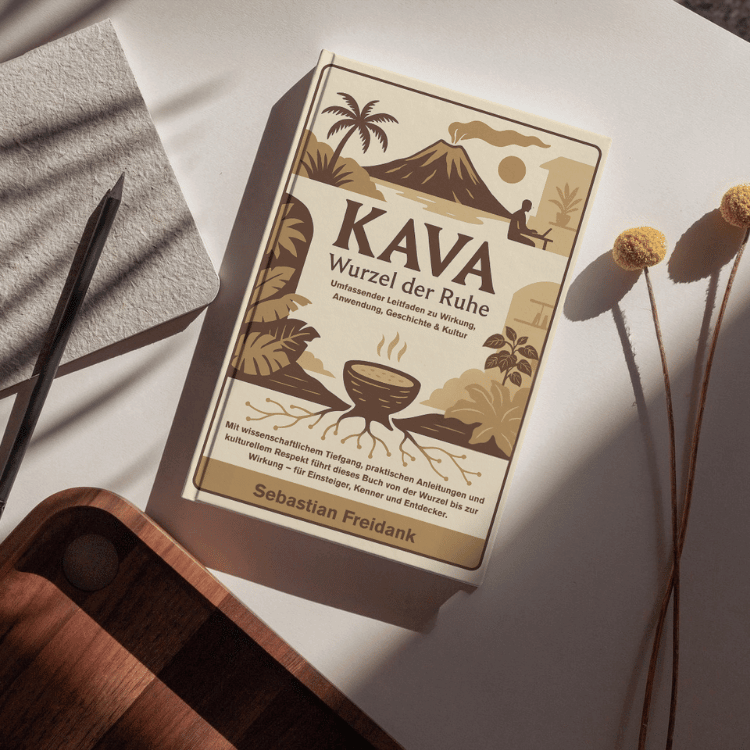
Kava – Root of Calm
The comprehensive guide to effects, history & culture.