
Sommaire
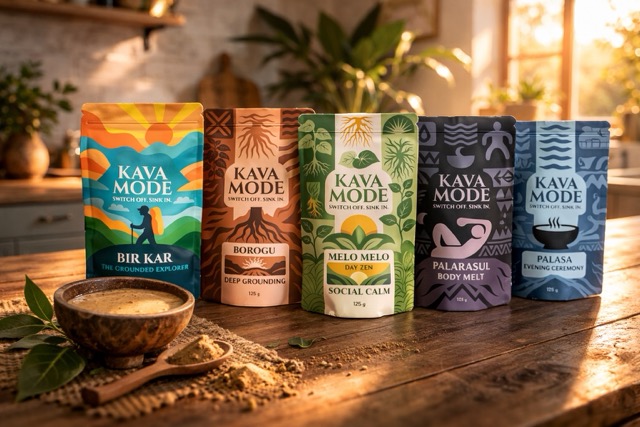
Kava Noble Premium
Découvrez la qualité et la pureté certifiées auprès de notre partenaire officiel.
Vers Kava-mode.comBref & Concis
Kava can interact with medicines and other central nervous system depressants. Laboratory findings show several possible CYP inhibitions, but small human studies do not confirm one uniform pattern across all enzymes. Alcohol and sedatives in particular should not be self-combined; regular medication warrants individual review.
- ●Alcool – Additive drowsiness and impaired coordination are possible; concurrent use is not recommended
- ●Benzodiazépines – Possible additive CNS depression; combine only after professional review
- ●Antipsychotiques – Sedation and pharmacokinetic interactions are possible; direct clinical data are limited
- ●Anticoagulants – Controlled interaction data are lacking; the narrow therapeutic window requires medical review
Le système cytochrome P450
Le système cytochrome P450 (CYP450) est une famille d'enzymes dans le foie responsables du métabolisme de la plupart des médicaments. Lorsqu'une substance inhibe ces enzymes, d'autres substances sont métabolisées plus lentement – leur effet et leurs effets secondaires peuvent ainsi être amplifiés.
Pourquoi est-ce important ?
Many medicines are metabolised by CYP enzymes. An in-vitro finding does not automatically mean clinically relevant inhibition in humans. Preparation, dose, duration and the medicine's therapeutic window determine practical relevance.
Quels enzymes sont inhibés ?
Mathews et al. (2002) tested kava extract and individual kavalactones in human liver microsomes and found inhibition of several CYP enzymes. These are in-vitro findings, not clinical inhibition ratings in humans:
| Enzyme | Force d'inhibition | Substrats importants (exemples) |
|---|---|---|
| CYP1A2 | In-vitro finding | Caféine, Théophylline, Clozapine, Olanzapine |
| CYP2C9 | In-vitro finding | Warfarine, Phénytoïne, AINS (Ibuprofène) |
| CYP2C19 | In-vitro finding | Oméprazole, Diazépam, Clopidogrel |
| CYP2D6 | In-vitro finding | Codéine, Tramadol, nombreux antidépresseurs |
| CYP3A4 | In-vitro finding | Benzodiazépines, Statines, nombreux antibiotiques |
Importance clinique
Russmann et al. (2005) reported reduced CYP1A2 activity in chronic users of traditional aqueous kava. Gurley et al. (2005; 12 healthy volunteers, 28 days, 138 mg kavalactones/day), by contrast, found reduced CYP2E1 but no significant change in CYP1A2, CYP2D6 or CYP3A4/5. The human findings are small and preparation- and consumption-dependent, so they cannot predict every medicine interaction.
Combinaisons à haut risque
The following combinations should be avoided or medically reviewed in advance. Reasons differ: some involve additive CNS effects or case reports, while others have only mechanistic signals and no controlled combination trials.
⚠ Alcool
Risiko: AVOID
Concurrent use of kava and alcohol is not recommended:
- 1.Additive CNS effects: Drowsiness, slower reactions and impaired coordination may increase.
- 2.Liver risk not quantified: A combined liver risk has not been quantified reliably; the combination is avoided because of this uncertainty.
- 3.Unpredictable intensity: Product, amount, drinking pattern and individual sensitivity make effects difficult to predict.
Do not use kava and alcohol together. The main practical reason is possible additive impairment of attention, reaction and coordination; the size of any additional liver risk is not reliably established.
⚠ Benzodiazépines & somnifères
Risiko: PROFESSIONAL REVIEW
Do not combine benzodiazepines or Z-drugs with kava without medical review:
- •Additive sedation: Drowsiness and psychomotor impairment may increase.
- •CNS depression: Clinically relevant potentiation is possible; controlled combination trials are lacking.
- •Interpret CYP findings: CYP3A4 inhibition was observed in vitro but not consistently confirmed in small human studies.
Rapport de cas : Almeida & Grimsley (1996) described a semicomatose state in a 54-year-old man after reported kava and alprazolam use. A single case report is a warning signal but does not establish mechanism or frequency.
⚠ Antipsychotiques
Risiko: PROFESSIONAL REVIEW
Individual medical review is appropriate before kava use with antipsychotics:
- •Sedation: Additive drowsiness or psychomotor impairment is possible.
- •Case reports: Individual reports describe movement disorders; frequency and causality are unclear.
- •CYP findings: Laboratory inhibition does not reliably predict the level of a specific medicine.
⚠ Anticoagulants (fluidifiants sanguins)
Risiko: PROFESSIONAL REVIEW
Warfarin, phenprocoumon and other anticoagulants require professional review because of their narrow therapeutic window:
- •Mechanistic signal: CYP2C9 inhibition was observed in vitro; a clinical kava-warfarin interaction has not been established in controlled studies.
- •Monitor INR: Changes in co-used products should be coordinated with the treating clinician.
- •Bleeding risk: The baseline risk of anticoagulation makes self-testing inappropriate.
Use kava with anticoagulation only after individual medical review.
Combinaisons à risque modéré
Les combinaisons suivantes nécessitent de la prudence et ne doivent être effectuées qu'après consultation d'un médecin. Un ajustement de la dose peut être nécessaire.
Antidépresseurs
Risiko: PROFESSIONAL REVIEW
- • Pharmacokinetic interactions may occur depending on the product but are not clinically established as a class
- • Serotonin syndrome from kava is not established as a typical clinical effect
- • Additive drowsiness or dizziness are possible
- • Direct clinical combination data are limited
- • Review co-medication individually rather than inferring from in-vitro CYP data
- • MAO-B effects of individual kavalactones have been studied preclinically
- • Pawa et al. (2026) found MAO-A inhibition by flavokawain A in an in-vitro enzyme assay; humans and combination with MAO inhibitors were not studied
- • Do not self-combine with MAO inhibitors because medicine interactions can be serious
- • Obtain medical review before use
Anticonvulsivants (antiépileptiques)
Risiko: PROFESSIONAL REVIEW
Phénytoïne, Carbamazépine, Valproate et autres anticonvulsivants :
- •Pharmacokinetics: Altered levels are possible but cannot be predicted reliably for individual combinations.
- •CNS effects: Additive drowsiness or coordination problems are possible.
- •Seizure control: Changes in co-used products belong under professional supervision.
En cas d'épilepsie, le Kava ne doit être utilisé que sous surveillance médicale.
Médicaments pour Parkinson
Risiko: PROFESSIONAL REVIEW
Levodopa et agonistes de la dopamine :
- •Mechanism unclear: Blanket clinical dopamine antagonism by kava has not been established.
- •Case reports: Individual reports describe worsening Parkinson symptoms; medical review is therefore needed.
With Parkinson's disease or related medication, use kava only after medical review.
Médicaments hépatotoxiques
Risiko: MODÉRÉ
Médicaments ayant un potentiel hépatotoxique connu :
- •Paracétamol/Acétaminophène: Particulièrement problématique à des doses plus élevées
- •Statines: Atorvastatine, Simvastatine, etc. (substrats CYP3A4)
- •Méthotrexate: Immunosuppresseur avec hépatotoxicité
- •Isoniazide: Médicament contre la tuberculose
Additional liver risk is plausible but not quantified for every combination. Potentially hepatotoxic medication requires individual medical review.
Tableau récapitulatif des interactions
| Classe de substance | Exemples | Risque | Mécanisme |
|---|---|---|---|
| Alcool | Éthanol | AVOID | Possible additive sedation and impaired coordination; liver risk not quantified |
| Benzodiazépines | Diazépam, Lorazépam, Alprazolam | PROFESSIONAL REVIEW | Possible additive CNS depression; one case report, no controlled combination trials |
| Antipsychotiques | Halopéridol, Olanzapine, Clozapine | PROFESSIONAL REVIEW | Sedation or interactions possible; direct clinical data limited |
| Anticoagulants | Warfarine, Phénprocoumone | PROFESSIONAL REVIEW | No controlled kava interaction established; narrow therapeutic window |
| ISRS | Fluoxétine, Sertraline, Paroxétine | PROFESSIONAL REVIEW | Possible sedation or pharmacokinetics; no established kava serotonin syndrome |
| Anticonvulsivants | Phénytoïne, Carbamazépine | PROFESSIONAL REVIEW | Possible additive CNS effects and unpredictable pharmacokinetics |
| Médicaments pour Parkinson | Levodopa, agonistes de la dopamine | PROFESSIONAL REVIEW | Case reports of symptom worsening; no blanket dopamine antagonism established |
| Statines | Atorvastatine, Simvastatine | PROFESSIONAL REVIEW | Direct clinical interaction data are lacking; review liver and medication context |
| Opioïdes | Codéine, Tramadol, Morphine | AVOID / REVIEW | Possible additive CNS depression |
| Caféine | Café, boissons énergétiques | CAUTION | Human CYP1A2 findings are small and inconsistent |
Recommandations pratiques
Liste de contrôle avant la consommation de Kava
- 1.Vérifier la liste des médicaments
Vérifiez toutes les médicaments actuels pour les interactions
- 2.Consulter un médecin
Obtenez des conseils médicaux avant la consommation de Kava en cas de prise régulière de médicaments
- 3.Éviter l'alcool
Do not use kava and alcohol together. The main practical reason is possible additive impairment of attention, reaction and coordination; the size of any additional liver risk is not reliably established.
- 4.Dosage faible
Do not experiment with a self-selected lower kava dose while taking medicines; obtain professional review of the combination.
- 5.Observer les symptômes
Surveillez la fatigue inhabituelle, les vertiges ou d'autres symptômes
Continuer dans le chapitre Sécurité
Basé sur des études de

Avec des contributions de
Ce wiki est une ressource curée qui synthétise la recherche d'études évaluées par les pairs et de chercheurs experts. Il n'a pas été écrit par les chercheurs énumérés ci-dessus, mais plutôt basé sur leurs travaux publiés.
Sources scientifiques
Les informations sur cette page sont basées sur les études et publications scientifiques suivantes :
Cytochrome P450 2E1 (CYP2E1) Is the Principal Enzyme Responsible for Urethane Metabolism
Hoffler U., El-Masri H.A., Ghanayem B.I. (2003) – Journal of Pharmacology and Experimental Therapeutics
Voir l'étudeSommaire
Kava Noble Premium
Découvrez la qualité et la pureté certifiées auprès de notre partenaire officiel.
Vers Kava-mode.com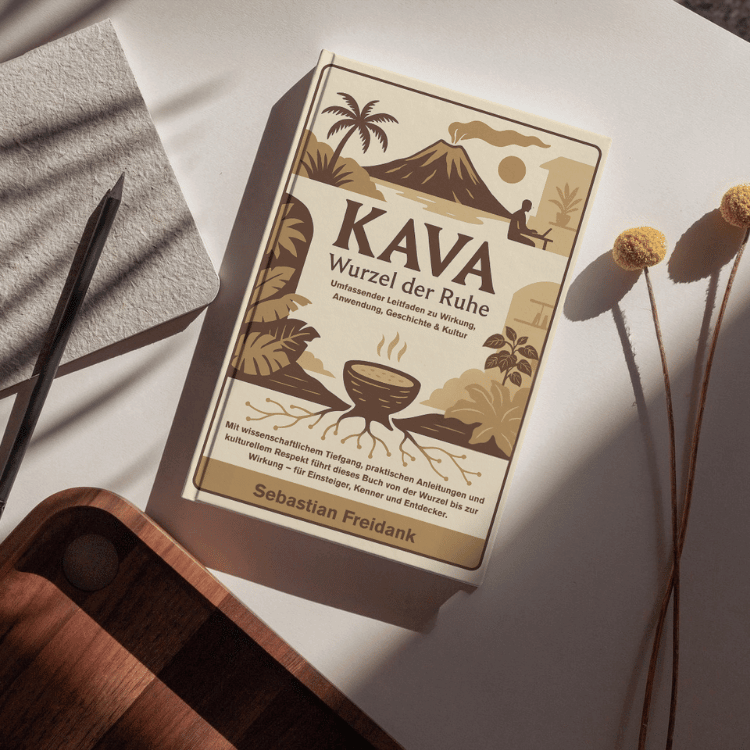
Kava – Racine de la tranquillité
Le guide complet sur l'effet, l'histoire et la culture.