
Περιεχόμενο
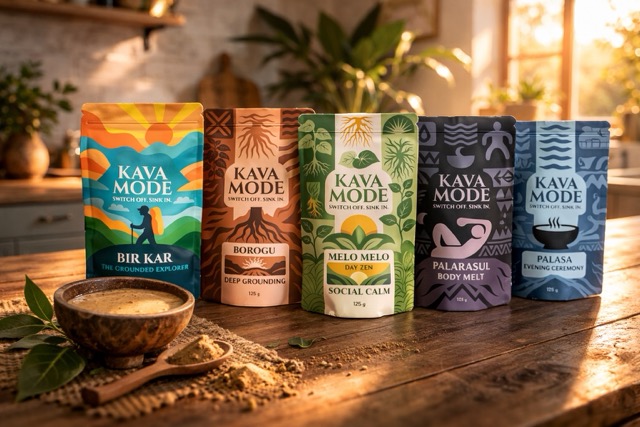
Premium Noble Kava
Ανακαλύψτε πιστοποιημένη ποιότητα και καθαρότητα από τον επίσημο συνεργάτη μας.
Στο Kava-mode.comΣύντομο & Σαφές
The cultivation of kava is an art that has been passed down from generation to generation for thousands of years. Since Piper methysticum is sterile and produces no seeds, the plant is completely dependent on humans. This unique dependency has led to a deep cultural connection between Pacific peoples and their sacred plant.
Vegetative Propagation
Kava propagation occurs exclusively vegetatively through cuttings. This is a direct consequence of the plant's sterility – a trait that developed through thousands of years of domestication.
Advantages of Vegetative Propagation
- Genetic identity with the mother plant
- Preservation of proven variety characteristics
- Predictable chemotype profile
- Faster growth than from seeds
- Proven quality across generations
Challenges
- No genetic variation possible
- Susceptibility to diseases (clones)
- Dependence on mother plants
- Limited spread rate
- Risk of variety loss
Cutting Propagation & Planting
The traditional method of cutting propagation follows a proven process:
Selection
Healthy stem sections with 2-3 nodes from a proven mother plant
Cut
Clean cut below a node, length approx. 20-30 cm
Preparation
Removal of lower leaves, brief drying of the cut surface
Planting
Insertion into loose, moist soil in shade, regular watering
Climate Requirements
Kava is a tropical plant with specific climate requirements. It thrives only within a relatively narrow range of environmental conditions.
| Parameter | Optimal Range | Tolerance Range | Note |
|---|---|---|---|
| Temperature | 20-30°C | 15-35°C | No frost tolerated |
| Rainfall | 2,000-3,000 mm/year | 1,500-4,000 mm/year | Evenly distributed |
| Humidity | 70-90% | 60-95% | High humidity preferred |
| Altitude | 0-500 m | 0-800 m | Lowland preferred |
| Sunlight | Partial shade | 30-70% shade | Young plants: more shade |
Soil Composition
Soil composition is one of the most critical factors for successful kava cultivation. The plant has high demands for drainage and nutrient content.
Ideal Soil Properties
- Structure: Loose, crumbly, well-aerated
- Drainage: Excellent – waterlogging quickly leads to root rot
- pH Value: Slightly acidic to neutral (5.5-6.5)
- Organic Content: High, rich in humus
- Depth: At least 60 cm for root development
To Avoid
- Compacted soils: Inhibit root growth
- Waterlogging: Leads to root rot and fungal infection
- Heavy clay soils: Poor drainage
- Saline soils: Kava is salt-sensitive
- Nutrient-poor soils: Reduce kavalactone content
In traditional growing areas, volcanic soils are often preferred. These offer an ideal combination of drainage, mineral content, and structure. In Vanuatu and Fiji, kava plantations are often established on gently sloping hillsides to ensure natural drainage.
Care & Growth
Kava is a relatively low-maintenance plant once established. The most important care measures focus on the first two years.
| Growth Phase | Period | Main Tasks | Special Notes |
|---|---|---|---|
| Establishment | 0-6 months | Regular watering, ensuring shade | Most critical phase |
| Juvenile Phase | 6-18 months | Weed control, mulching, fertilizing if needed | Rapid growth |
| Maturation Phase | 18-36 months | Minimal care, pest control | Root development |
| Harvest Maturity | 3-5+ years | Quality assessment, harvest preparation | Optimal potency |
Harvest & Maturity
Harvest timing is crucial for the quality of the final product. One of the most important rules in kava cultivation is: The older the plant, the more potent and balanced the effect profile.
Quality Factors at Harvest
| Age at Harvest | Kavalactone Content | Quality Level | Usage |
|---|---|---|---|
| < 2 years | Low (3-5%) | Immature | Not recommended |
| 2-3 years | Medium (5-10%) | Acceptable | Simple products |
| 3-5 years | High (10-15%) | Good | Standard quality |
| 5-7 years | Very high (15-20%) | Premium | High-quality products |
| > 7 years | Maximum (18-25%) | Exceptional | Ceremonial use |
"For high quality ('Noble Kava'), the plant must grow for at least 3 to 5 years. The older the plant, the more potent and balanced the effect profile typically is."
Major Growing Regions
Today, kava is grown in a belt of tropical islands across the Pacific. Each region has developed its own varieties, traditions, and quality characteristics.
| Region | Known Varieties | Characteristics | Production |
|---|---|---|---|
| Vanuatu | Borogu, Melomelo, Palarasul, Kelai | Greatest variety diversity (80+ cultivars) | World's largest producer |
| Fiji | Waka, Lewena, Loa | Known for "Waka" (premium roots) | Second largest producer |
| Tonga | Pouni Ono, Kava Tonga | Very mild, "creamy" kavas | Medium production |
| Samoa | 'Ava Lea, 'Ava Sa'a | Traditional ceremonies | Local consumption |
| Hawaii | Moi, Mahakea, Hiwa | Revival of traditional varieties | Growing |
| Pohnpei | Sakau varieties | Fresh kava juice ("Sakau") | Local consumption |
Vanuatu is considered the homeland of cultivated kava and still harbors the greatest genetic diversity. From here, the plant was spread by Polynesian seafarers across the entire Pacific – as one of the most important "Canoe Plants" that were taken along with every settlement of new islands.
Continue to next category:
History & Origins
The 3000-year journey of kava across the Pacific
Βασισμένο σε μελέτες

CIRAD, French Agricultural Research Centre for International Development
Προβολή προφίλ →Με συνεισφορές από
Αυτό το wiki είναι ένας επιμελημένος πόρος που συνθέτει έρευνα από ομότιμα αναθεωρημένες μελέτες και ειδικούς ερευνητές. Δεν γράφτηκε από τους ερευνητές που αναφέρονται παραπάνω, αλλά βασίζεται στο δημοσιευμένο έργο τους.
Επιστημονικές Πηγές
Οι πληροφορίες σε αυτή τη σελίδα βασίζονται στις παρακάτω επιστημονικές μελέτες και δημοσιεύσεις:
Kava: The Pacific Elixir - The Definitive Guide to Its Ethnobotany, History, and Chemistry
Vincent Lebot, Mark Merlin, Lamont Lindstrom (1997) – Yale University Press
Δείτε τη μελέτηGenetic control of kavalactone chemotypes in Piper methysticum cultivars
Lebot V., Levesque J. (1996) – Phytochemistry
Δείτε τη μελέτηΠεριεχόμενο
Premium Noble Kava
Ανακαλύψτε πιστοποιημένη ποιότητα και καθαρότητα από τον επίσημο συνεργάτη μας.
Στο Kava-mode.com
Kava – Ρίζα της ηρεμίας
Ο πλήρης οδηγός για την επίδραση, την ιστορία και την κουλτούρα.